
※本ページはプロモーションが含まれます
If you’ve ever wondered why the same Charizard shows up cheaper, sharper, and weeks earlier on Japanese storefronts than it does on your local game store shelf, the short answer is: Japan gets nearly every Pokémon TCG set first, Japanese cardstock centers and cuts more consistently for grading, and Japanese packs are usually cheaper per card — but a full Japanese deck can’t be mixed with English cards in sanctioned play, and importing carries its own risks (customs, counterfeits, and reading a set list you can’t read). Whether importing makes sense for you depends on whether you’re collecting, grading, or actively competing at Regionals.
This isn’t a “Japanese cards are secretly better” hype piece. Both print runs have real trade-offs, and I’ll walk through the four things that actually matter: print quality/centering, release timing, price, and tournament legality — then tell you honestly which collector profile should bother importing at all.
- Print quality and centering: why Japanese cards grade better
- Release timing: Japan almost always goes first
- Price differences: cheaper per pack, but do the real math
- Comparison table: Japanese vs. English product at a glance
- Tournament legality: the part importers get wrong
- Who should actually import Japanese product
- FAQ
- The takeaway
- Related Articles
- More Trading Card Game Guides
Print quality and centering: why Japanese cards grade better

This is the most-cited difference and it holds up under scrutiny, though the reason is more about tolerances than “Japan tries harder.” Japanese cards use a thinner border relative to the artwork, so a small manufacturing offset is far less visually obvious than the same offset on an English card, where the wider yellow/white frame makes any miscentering pop immediately. Japanese cardstock also tends to run thinner and slightly glossier, and collectors and graders alike frequently note cleaner factory cuts on Japanese sheets.
The practical result shows up in PSA population reports: Japanese copies of the same print run consistently pull a higher percentage of PSA 10s than their English counterparts, because centering — the single biggest reason English cards miss gem mint — is less punishing on the Japanese layout. Evolving Skies’ Umbreon VMAX alternate art (#215/203) is the poster child for this: it’s one of the most submitted cards in PSA’s history, and the Japanese “Fusion Arts” printing of the same art (as well as the Umbreon VMAX Alternate Art (Evolving Skies) English version) consistently posts a noticeably higher gem-rate than the English Evolving Skies version.
The catch: a higher PSA 10 rate also means a higher population of PSA 10s for that Japanese card, which can compress the price premium a gem-mint copy commands over a PSA 9. English gem mints of hard-to-center cards are scarcer and sometimes carry a bigger grading-premium precisely because they’re harder to pull off. “Easier to grade” isn’t automatically “worth more graded” — do the population-report math before you assume a Japanese copy is the better grading bet for resale.
Release timing: Japan almost always goes first
Japan gets new expansions before every other region, and the gap has actually widened in the current Mega Evolution era rather than shrunk. Japan’s Storm Emeralda expansion released July 31, 2026 with roughly 76 main-set cards plus another 35-40 secret rares; the English localization (rumored as Delta Reign) isn’t expected until around November 6, 2026 — call it a three-month gap, longer than the six-to-eight week turnaround that was typical a couple of years ago.

That gap is exactly why some collectors import: if you want to pull (or buy singles of) a chase card like the newest Mega ex — such as the Mega Charizard X ex (Phantasmal Flames) shown above — before it’s even confirmed for the English set list, Japanese product is the only way to get it early. It’s also why Japanese-only price data (via PokeGuardian, Pokellector, or Yahoo Auctions Japan) is sometimes the earliest real signal of how a new mechanic or chase card is landing with the market, months before English pricing exists at all.
The catch: early access cuts both ways. Cards that look like format-defining bombs in the Japanese meta sometimes get errata’d, power-adjusted, or simply don’t hit the same way once the English competitive scene builds around them — and if you buy Japanese singles speculatively based on early hype, you’re pricing in a card whose English-market reception is still unknown.
Price differences: cheaper per pack, but do the real math
As of mid-2026, a Japanese booster box typically runs $50-$65 on the secondary/import market for 30 packs, versus $100-$150 for an English booster box (which usually contains fewer packs per box depending on the set). On a per-pack basis, a Japanese Booster Box is routinely 30-50% cheaper per pack than an English Booster Box — and it got a little pricier in May 2026, when The Pokémon Company raised the price of a standard Japanese pack from ¥180 to ¥200 (a box of 30 packs went from ¥5,400 to ¥6,000, or roughly $37-$41 at recent exchange rates before import markup).
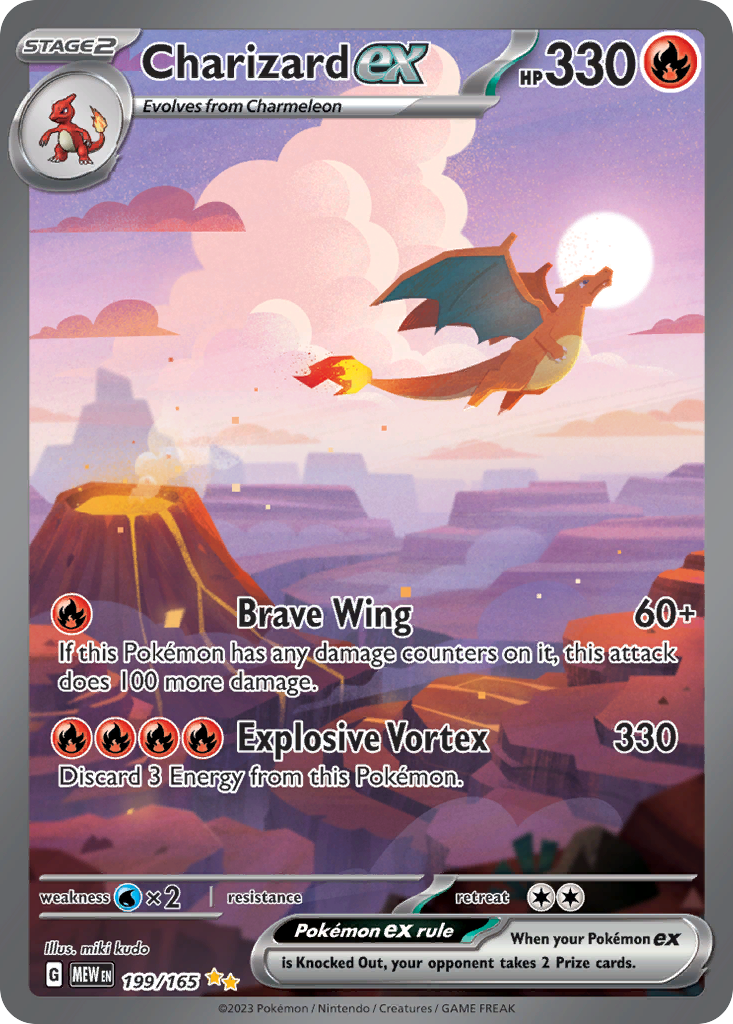
The catch is that “cheaper per pack” doesn’t mean “cheaper overall” once you import. Add international shipping, any customs/duty exposure, and the markup that Japanese-import specialty retailers charge, and a Japanese box can land close to English box pricing by the time it’s in your hands — especially for smaller one- or two-box orders. The value case gets much stronger when you’re ordering a full case, or buying Japanese singles like a Charizard ex Special Illustration Rare (151) instead of sealed product, since singles skip a lot of the shipping-weight penalty.
Comparison table: Japanese vs. English product at a glance
| Factor | Japanese Cards | English Cards |
|---|---|---|
| Release timing | First (often 6 weeks to 3+ months ahead) | Later, localized |
| Typical PSA 10 rate | Higher (thinner border, tighter tolerance) | Lower on the same art/print run |
| Price per pack (as of mid-2026) | ~¥200/pack (~$1.35), box ~$50-$65 | Box typically $100-$150 |
| Tournament legality (US/EU sanctioned play) | Only in an all-Japanese deck | Legal in English-language decks |
| Import risk | Customs delays, counterfeit risk on singles, language barrier for errata/rulings | N/A — sold through normal retail |
| Best for | Grading submissions, early chase pulls, collectors comfortable importing | Tournament players, US/EU resale, no import hassle |
Prices above are approximate ranges observed as of August 2026 and will move with exchange rates, set popularity, and print run size — this isn’t financial advice, and card values can (and do) swing significantly within weeks of a set’s release.
Tournament legality: the part importers get wrong
This is the section that trips people up. Official Play! Pokémon tournament rules require every card in your deck to be the same language — you cannot run a mostly-English deck with a couple of Japanese tech cards, even if the card text is functionally identical. If you want to run Japanese cards competitively, your entire 60-card deck (plus Energy) has to be Japanese, and you’ll typically need to provide printed English translations or oracle text for judges and opponents at a sanctioned event.
That rule exists partly because of card-stock consistency: mixing print runs from different regions can create subtle differences in thickness or cut that fall under the marked-card policy, since a player could theoretically identify a card by feel through the sleeve. It’s not that Japanese and English cards are visually distinguishable from the back in a way that matters to a spectator — it’s a fairness safeguard against any tactile tell.
There’s also a legality wrinkle specific to importing early: a Japanese card isn’t automatically tournament-legal in the Standard format the moment it’s pulled from a Japanese pack. It follows the same Regulation Mark rotation rules as everywhere else, and — more importantly — it generally can’t be used at all until Play! Pokémon formally recognizes that set/card for organized play, which for Japan-exclusive card pools functions on its own region-locked schedule.
Who should actually import Japanese product
- PSA/CGC graders chasing population-report value: the centering advantage is real and can meaningfully change your gem-mint odds on cards you already planned to grade.
- Collectors who want the newest chase card before English release: if being early matters more to you than tournament legality, Japan is 6 weeks to 3+ months ahead depending on the set.
- Budget-conscious set collectors building playsets or binders: cheaper packs mean cheaper sets, and language doesn’t matter if you’re not reading the card text competitively.
- Skip importing if: you’re building a competitive Standard deck for local/Regional events (build English, full stop), you don’t have a plan for customs/duties, or you’re buying loose Japanese singles from an unverified marketplace — counterfeit Japanese singles are a real and growing problem on sites without seller protection, and verifying authenticity is harder when you can’t read the set code or holo pattern the way an experienced JP-market buyer can.
FAQ
Can I use Japanese Pokémon cards in a US or European tournament?
Only if your entire deck is in Japanese — English tournament rules require every card in a deck to be the same language, so you can’t mix Japanese tech cards into an otherwise-English list. You’ll also typically need to bring translated card text for judges.
Are Japanese Pokémon cards actually higher quality than English cards?
The consensus among graders is that Japanese cards center more consistently and post higher PSA 10 rates on the same print run, largely due to a thinner card border and tighter manufacturing tolerance rather than fundamentally different materials. English cardstock is thicker and has a slightly duller gloss, which some collectors actually prefer for the in-hand feel.
Why does Japan always get new sets before other regions?
The Pokémon Company’s Japanese arm, Creatures Inc., develops and prints sets domestically first; other regions receive localized versions after translation, playtesting for regional balance, and print scheduling — a process that has recently stretched to around three months for some 2026 sets versus the six-to-eight weeks typical a couple of years ago.
Is it safe to buy Japanese Pokémon singles online?
It can be, but stick to established import retailers or marketplaces with buyer protection and seller ratings — counterfeit Japanese singles are harder for non-Japanese-reading buyers to catch, since spotting a fake often relies on recognizing the correct set code, holo pattern, or font for that specific Japanese print run.
Do Japanese cards hold their value as well as English cards for resale?
It varies by card. Some Japanese alternate-art and secret rares command strong premiums in their own right (especially early copies of a hot new chase card), but the broader US/EU resale market is built around English product, so English copies are generally easier to liquidate quickly at a predictable price.
The takeaway
Japanese Pokémon cards aren’t objectively “better” — they’re earlier, generally cheaper per pack, and grade more forgivingly, in exchange for real friction: tournament-legal only as a full Japanese deck, exposed to import costs and counterfeit risk, and priced in a market that moves independently of English-language demand. If you’re grading for population-report value or you just want the newest chase card before it’s confirmed for English release, importing is worth learning to navigate. If you’re building a Standard deck for your local league or you’d rather not deal with customs and translation, buy English and don’t overthink it.
Related Articles
More Trading Card Game Guides
- Japanese vs English Dragon Ball Fusion World Cards Compared (Dragon Ball Super Card Game)
- Japanese vs English One Piece Card Game: Full Buying Guide (One Piece Card Game)
- Which Naruto TCG Should You Start With in 2026? (Naruto Card Game)

Comments