※本ページはプロモーションが含まれます
Disclosure: This post contains affiliate links. If you buy through them, we may earn a commission at no additional cost to you. Learn more.
The short version: if you’re starting a Japanese Pokémon figure collection, there are really only three official lines worth knowing. Takara Tomy’s “Moncolle” (Monster Collection) makes small, accurate scale figures of every Pokémon and is the line most collectors start with. Bandai’s gashapon (capsule toy) releases are cheap, random, and sold through vending machines — closer to a lottery than a purchase. And Kotobukiya’s ARTFX statues are premium, display-grade pieces built for shelf presence rather than pocket money. Everything else you’ll find labeled “Pokemon figure” online that isn’t from one of those three names, plus Bandai itself, is either a knockoff or a completely different (often unlicensed) product.
This guide breaks down what each line actually is, how to tell genuine Takara Tomy or Bandai product from the bootlegs that flood Amazon and eBay listings, what you should expect to pay at each tier, and which specific figures are worth starting with.
The three official lines that matter
Takara Tomy Moncolle — the everyday collector’s line
Takara Tomy has been Pokémon’s official Japanese toy licensee since the franchise launched in 1996, and its Monster Collection line — almost universally shortened to “Moncolle” — is the backbone of Japanese Pokémon figure collecting. It covers essentially every Pokémon that’s ever existed, released in small batches tied to each new game and anime arc, which is why the catalog now runs into the thousands of individual figures.
Moncolle comes in two main sizes you’ll see on packaging and listings:
- MS series (“mini”) — roughly 1.2–1.6 inches (3–4 cm) tall, priced around 1,700–2,500 JPY (roughly $11–16). This is the standard, most affordable size and where most collectors start.
- ML series (“large”) — around 3.9 inches (10 cm) tall, launched in November 2019 specifically for Pokémon too visually significant (mostly Legendaries) to do justice at MS scale. These run higher, typically 2,500–5,000+ JPY ($16–30+).
Both sizes are static, non-articulated figures focused on sculpt and paint accuracy rather than posability — they’re meant to be a faithful miniature of the Pokémon, not an action figure.
Bandai gashapon — cheap, random, and part of the culture
Gashapon (capsule toys sold from coin-operated vending machines, the name comes from the “gasha-gasha” crank sound and “pon” of the capsule dropping out) is a huge part of everyday retail culture in Japan, and Pokémon is one of Bandai’s most consistent gashapon subjects. Recent 2026 series give a sense of the format: the “Pokémon Battle Collection Light Gashapon” (three types, ~800 JPY each, March 2026), the 30th-anniversary “Pokémon First Partner Acrylic Swing” (~300 JPY, March 2026), and “Pokémon Gashatto Collect 06” (a Poké Ball–shaped capsule, five types, ~500 JPY, April 2026) are all recent examples of the genre.
The catch with gashapon is baked into the format: you don’t choose which figure you get. Each machine or blind box contains a set lineup (say, five designs), and every capsule is a random pull from that lineup — duplicates included. This is genuinely fun for casual collecting and cheap enough (typically 300–800 JPY, or roughly $2–5, per capsule) that duplicates aren’t a big financial loss, but it’s a poor way to target one specific figure. If you need a particular design guaranteed, buy it as a single item from a reseller’s completed stock rather than gambling on a capsule.
Kotobukiya ARTFX / ARTFX J — display-grade statues
Kotobukiya is a separate, officially licensed manufacturer that produces higher-end, non-toy Pokémon statues under its ARTFX and ARTFX J lines — trainer characters (Red, Leaf, Shirona) posed together with their partner Pokémon, based on artwork by illustrator Hitoshi Ariga. These are priced and built like the collectible statues Kotobukiya makes for other franchises: painted resin/PVC, 1/6–1/10 scale, meant for a display shelf rather than play. Expect roughly 8,000–20,000+ JPY ($50–125+) depending on the piece, well above Moncolle or gashapon pricing.
Official Takara Tomy/Bandai vs. bootlegs
Bootleg Pokémon figures are common enough on general marketplaces (especially older Amazon third-party listings and casual eBay sellers) that it’s worth checking a few things before buying anything not sold directly through a known Japanese hobby retailer:
- Check the copyright line. Genuine Takara Tomy and Bandai product always carries a copyright stamp somewhere on the figure or packaging — something like “©Nintendo・Creatures・GAME FREAK・TV Tokyo・ShoPro・JR Kikaku ©Pokémon” with a matching year. Missing, blurry, or oddly worded copyright text is one of the most reliable tells.
- Look at the seam lines and logo sharpness. Bootleggers frequently cast their own molds from an existing legitimate figure. That process softens fine detail — the manufacturer’s logo loses crispness, and seams that are barely visible on a real figure become more pronounced on a bootleg cast from it.
- Compare paint application. Official Moncolle and gashapon figures have clean, consistent paint boundaries. Bleeding paint, visible brush strokes on details that should be crisp, or paint that doesn’t match reference art closely are common bootleg giveaways.
- Be suspicious of price outliers. A “Moncolle” figure listed well below the roughly $11–16 street price for an MS figure, especially in bulk lots or “mystery box” listings, is very often not genuine Takara Tomy stock.
- Buy from retailers who source directly from Japan. Import-focused marketplaces that list Japanese GTIN/barcode numbers and source from Takara Tomy, Bandai, or Kotobukiya’s own distribution are far more reliable than a generic third-party marketplace listing with no manufacturer traceability.
None of this means every marketplace listing is fake — most aren’t — but a figure that’s supposed to be officially licensed and shows none of the hallmarks above is worth a second look before you pay.
Price tiers at a glance
| Line | Typical size | Price range (JPY) | Approx. USD* | How you buy it |
|---|---|---|---|---|
| Moncolle MS | 1.2–1.6 in / 3–4 cm | 1,700–2,500 JPY | $11–16 | Fixed price, choose exact Pokémon |
| Moncolle ML | ~3.9 in / 10 cm | 2,500–5,000+ JPY | $16–30+ | Fixed price, choose exact Pokémon |
| Bandai gashapon | Varies, usually small | 300–800 JPY/capsule | $2–5 | Random pull from a fixed lineup |
| Kotobukiya ARTFX / ARTFX J | Display statue scale | 8,000–20,000+ JPY | $50–125+ | Fixed price, choose exact piece |
*Approximate, based on a roughly ¥159–160/USD exchange rate as of mid-August 2026. Currency conversion, import fees, and marketplace shipping charges will change your actual out-of-pocket cost — treat these as directional, not final checkout prices.
What to buy first
If you’re new to the hobby, Moncolle MS figures are the easiest and safest entry point: they’re inexpensive, you know exactly which Pokémon you’re getting, and the line’s size and finish are consistent enough that a handful of them display well together on a shelf. Here are genuine, currently in-stock Moncolle and Ultimate Match figures to start with.
Moncolle MS mini figures (~$11–12 each)

TAKARA TOMY Pokemon Moncolle MS-18 Pudding — 1,831 JPY

TAKARA TOMY Pokemon Moncolle MS-38 Slowpoke — 1,748 JPY

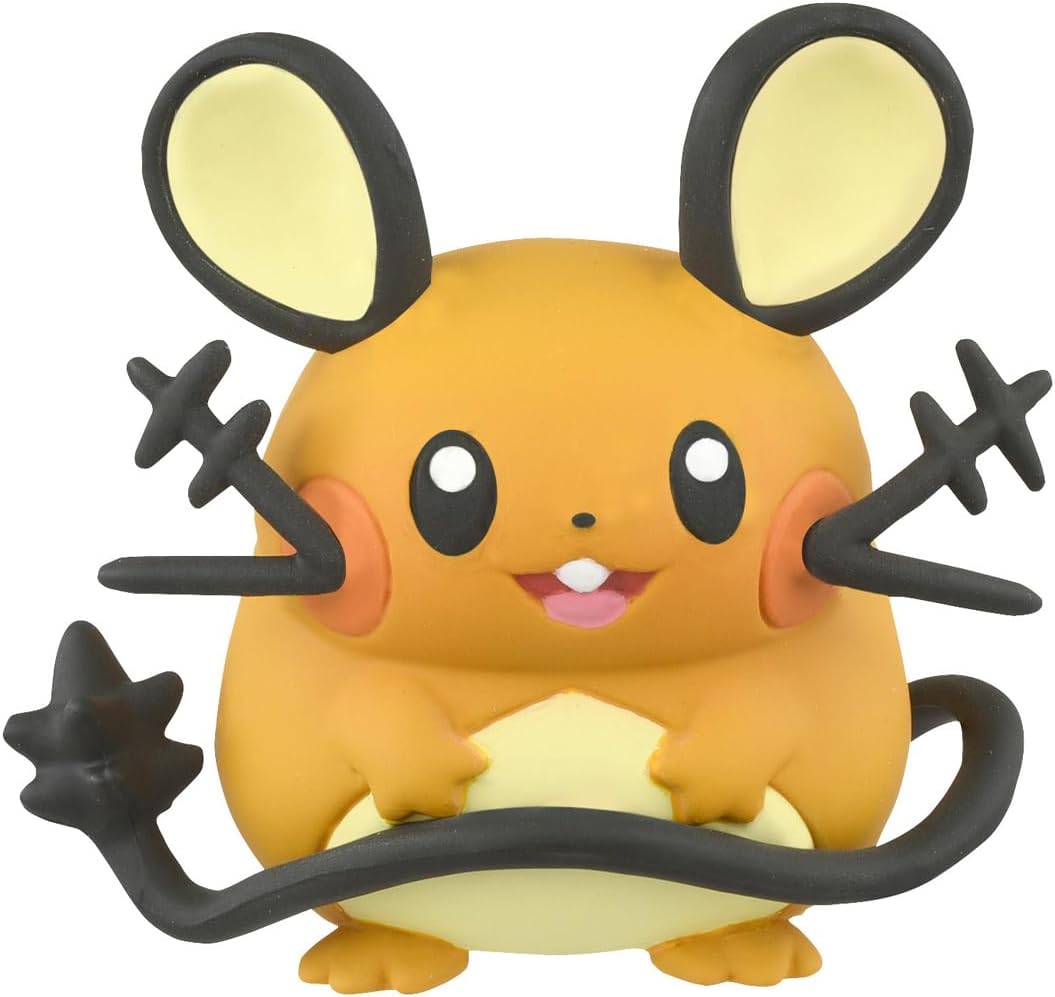
TAKARA TOMY Pokemon Moncolle MS-44 Dedenne — 1,831 JPY

TAKARA TOMY Pokemon Moncolle MS-49 Ditto — 1,831 JPY
Moncolle ML — larger Legendary-scale figures (~$15–28 each)
Once you’ve got a feel for the MS scale, the ML line is the natural next step for Pokémon that deserve a bigger presence on the shelf.

Takara Tomy Pokemon Monster Collection ML-24 Kyurem Pokemon Figure Toy — 2,422 JPY

Pokemon Monster Collection ML-15 Lunala — 4,435 JPY
Ultimate Match — figure-and-capsule sets
Takara Tomy’s “Ultimate Match” sub-line pairs a Moncolle-style figure with a themed Poké Ball capsule (Master Ball, Super Ball, etc.), sold as a fixed, non-random set rather than a gashapon pull — a nice middle ground if you like the capsule presentation but still want to choose your exact Pokémon.

Pokemon Pokemon Ultimate Match 07 Mewtwo (Master Ball) — 4,258 JPY

Pokemon Ultimate Match 09 Sawblaze (Super Ball) — 2,505 JPY
Import costs and timing, honestly
Buying Japanese figures from outside Japan almost always means going through an import mall, proxy shopping service, or a reseller who’s already imported the stock — and each of those adds cost and time on top of the JPY sticker price:
- Shipping. International shipping on small, dense items like figures is rarely cheap relative to the item price — expect it to meaningfully raise the effective per-figure cost, especially on single-item orders. Batching several figures into one order is the most reliable way to bring the per-item shipping cost down.
- Import duties/taxes. Depending on your country and the total order value, customs duty or import VAT/sales tax may apply on arrival. Rules vary widely by country, so check your own customs threshold rather than assuming it’s duty-free.
- Lead time. Import orders from Japan typically take longer than domestic marketplace purchases — plan for weeks, not days, especially around Japanese public holidays or major release windows when order volume spikes.
- Stock is real but limited. Unlike mass-market Western toys, Moncolle figures are printed in batches tied to Japanese release schedules. A specific figure that’s in stock today may not be restocked once it sells through, so don’t assume you can always circle back later for the exact one you skipped.
None of this makes importing a bad idea — it’s the only reliable way to get the full Moncolle catalog rather than the small subset that gets a Western release — but budget the extra cost and time into your decision rather than comparing only the JPY sticker price to domestic toy prices.
FAQ
Is Takara Tomy the official Pokémon toy company?
Yes. Takara Tomy has been Pokémon’s official Japanese toy licensee since the franchise began in 1996, and its Monster Collection (“Moncolle”) line is the primary official figure line covering the full roster of Pokémon.
What’s the difference between Moncolle MS and ML figures?
MS (“mini”) figures are roughly 1.2–1.6 inches (3–4 cm) tall and typically cost 1,700–2,500 JPY. ML (“large”) figures, introduced in November 2019, are about 3.9 inches (10 cm) tall and cost more, usually 2,500–5,000+ JPY. ML is generally reserved for Legendary and other visually significant Pokémon that don’t translate as well to the smaller scale.
Are gashapon Pokémon figures worth collecting?
They can be, but go in knowing you can’t choose which specific design you get — gashapon is a random pull from a fixed lineup of designs (typically three to five per series), sold through capsule vending machines for roughly 300–800 JPY each. It’s a low-cost, fun way to collect casually, but a poor choice if you need one specific figure guaranteed — buy that particular design as a completed single item from a reseller instead.
How can I tell if a Pokémon figure is a bootleg?
Check for a proper copyright line (something like “©Nintendo・Creatures・GAME FREAK ©Pokémon” with a matching year), look closely at seam lines and logo sharpness (bootlegs cast from existing figures lose fine detail), and be wary of paint that bleeds or doesn’t match reference art. A price well below the typical $11–16 range for a Moncolle MS figure is also a red flag.
Should I start with Moncolle, gashapon, or ARTFX statues?
Moncolle MS figures are the best starting point for most new collectors — they’re inexpensive (roughly $11–16), you pick the exact Pokémon rather than gambling on a random pull, and the line’s consistent scale makes early purchases display well together. Save ARTFX statues for once you know which characters and Pokémon you actually want a premium display piece of, since they’re a much bigger investment per item.
The takeaway
Japanese Pokémon figure collecting isn’t complicated once you know the three lanes: Takara Tomy Moncolle for accurate, affordable scale figures you pick by name; Bandai gashapon for cheap, random, low-stakes fun; and Kotobukiya ARTFX for the rare display piece worth spending real money on. Start with a few Moncolle MS figures to get a feel for build quality and official markings, check copyright text and paint quality before buying from any unfamiliar seller, and budget extra time and cost for shipping if you’re importing rather than buying domestically. From there, expanding into ML-scale Legendaries or your first ARTFX statue is just a matter of what you want on the shelf next.
Related Articles
- Japanese vs. English Pokémon Cards: Should You Import? (2026)
- Pokémon Card Value Myths, Debunked (2026 Collector Guide)
- Vintage WOTC Pokémon Cards: A Collector’s Guide (1999–2003)
More Trading Card Game Guides
- Japanese vs English Dragon Ball Fusion World Cards Compared (Dragon Ball Super Card Game)
- Japanese vs English One Piece Card Game: Full Buying Guide (One Piece Card Game)
Comments