※本ページはプロモーションが含まれます
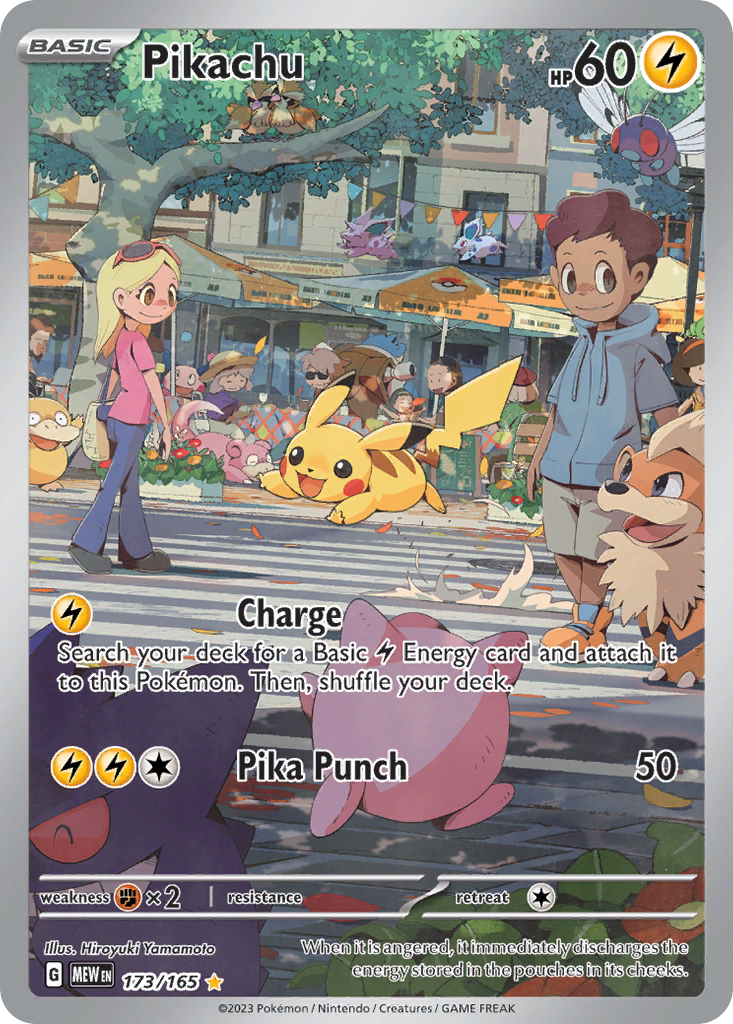
The short version: buy from marketplaces with real buyer protection (TCGplayer, eBay with feedback history, your local game store, or PSA/CGC-certified slabs you can verify online), never wire money or pay via “friends and family” for a card you haven’t inspected, and learn one or two non-destructive authentication checks before you spend real money on a chase card. Counterfeits are common enough in 2026 that PSA now lists Pokémon as the single most-faked trading card brand it handles — so this isn’t paranoia, it’s just basic due diligence.
This guide walks through which platforms are actually safe, the red flags that show up in scam listings over and over, how to check a card yourself before you pull the trigger, and exactly what to do if you already got burned.
Why counterfeits are a real problem right now
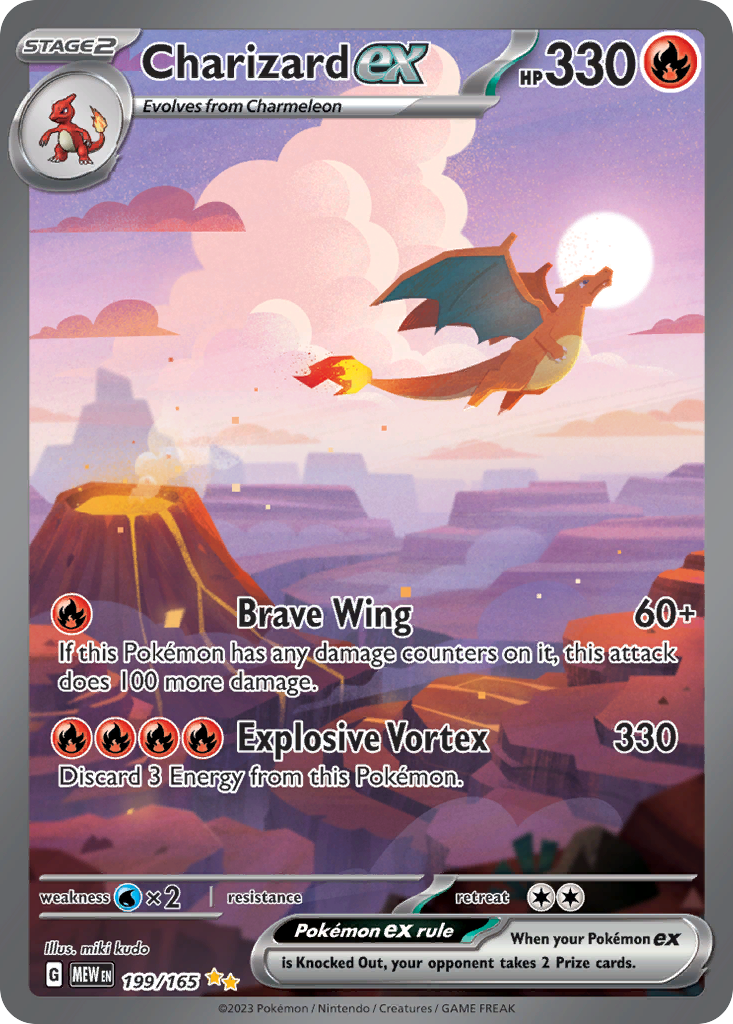
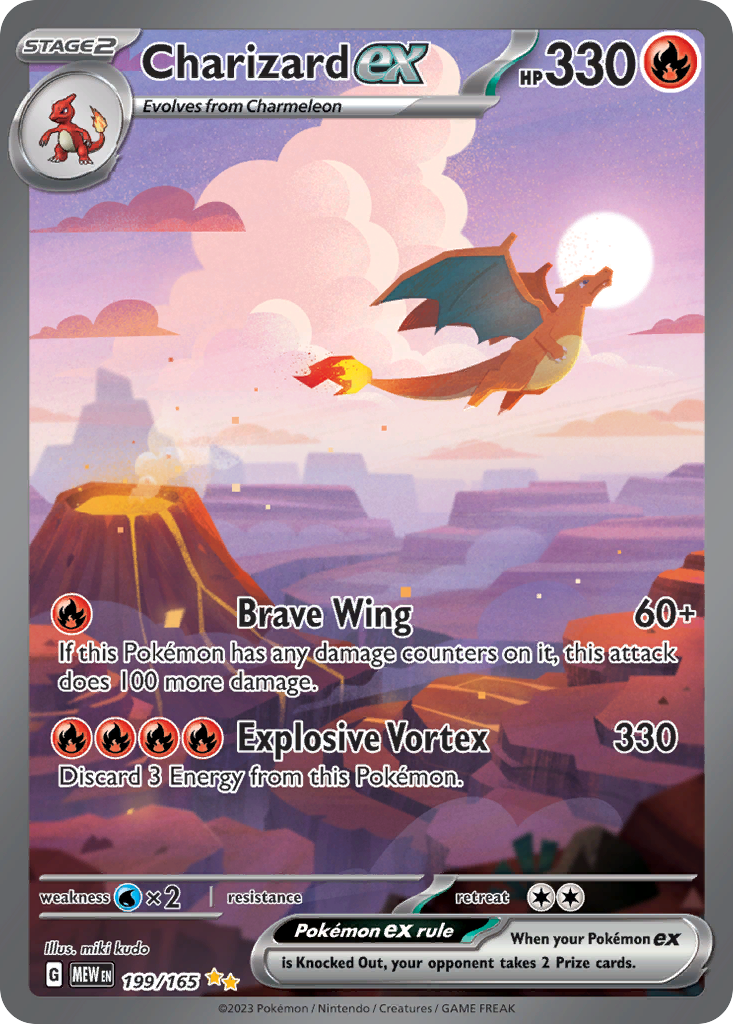
Card counterfeiting isn’t a fringe issue anymore. PSA’s own grading data identifies Pokémon as the most-faked trading card category it processes, and the top targets are exactly the cards you’d expect: Charizard, Pikachu, and Gengar in basically any high-rarity print. A card like Charizard ex from Scarlet & Violet: 151 (Special Illustration Rare, #199) is a good example of why — it’s trading around $360-400 on TCGplayer as of early August 2026 (market price $365.66, per Pokémon TCG API pricing data pulled August 4, 2026), which is more than enough margin to make faking it worthwhile for scammers, and its instantly recognizable art makes it a magnet for both counterfeiters and casual buyers who don’t know what to check for.
Modern counterfeits aren’t the obviously-wrong “XY” bootlegs from a decade ago, either. Current fakes use decent card stock, closer-to-correct fonts, and in some cases foil texture that photographs convincingly online — which is exactly the problem. A counterfeit that looks fine in a marketplace listing photo can still fail a light test or feel wrong the second it’s in your hand. That gap between “looks fine in a photo” and “passes inspection” is where online buyers get burned, because you can’t run any physical test before you click “buy.”
One important caveat before we go further: card prices move fast, and everything quoted in this article is a snapshot, not a permanent value. Treat any price figure here as directional, not as investment guidance — this is a collecting and buying-safety guide, not financial advice.
Where it’s actually safe to buy
Not all “trusted” marketplaces offer the same level of protection, and not all risky-looking channels are automatically scams. Here’s how the main options stack up.
| Where to buy | Trust level | Buyer protection | Typical price vs. market |
|---|---|---|---|
| TCGplayer Marketplace | High | TCGplayer Safeguard — file a counterfeit claim within 30 days of delivery for a full refund | At or near market price |
| eBay (established seller, high feedback) | High | eBay Money Back Guarantee; Authenticity Guarantee kicks in automatically for many cards over roughly $2,000 | Market price, sometimes lower on auctions |
| Official Pokémon Center / Pokémon Center Elite Trainer Box | Highest (sealed product only) | Standard retail return policy | MSRP, but stock sells out fast |
| Local game store (LGS) | High | In-person inspection before you pay; return policy varies by store | Sometimes a slight premium over online |
| Pre-graded PSA/CGC slabs | High, if you verify the cert | Grading company backs its own authentication; free cert lookup on psacard.com or cgccards.com | Premium over an equivalent raw card |
| Facebook Marketplace / Instagram DM sellers | Low | Little to none — “friends and family” payment has zero recourse | Often suspiciously below market |
| Random storefronts on marketplaces with no seller history | Very low | None | Too-good-to-be-true pricing |
TCGplayer and eBay aren’t perfect — TCGplayer raised its marketplace commission cap from $50 to $75 in February 2026, which some sellers pass along in pricing, and eBay still has individual sellers who slip through with misleading photos — but both have formal dispute processes that actually work if a card turns out to be fake. Cash-app or “friends and family” transactions on social media have none of that; once the money moves, it’s gone.
Red flags that show up in scam listings
- Price is dramatically below market. If a Special Illustration Rare that trades for $300+ is listed at $80 “must sell fast,” that’s the single most reliable tell. Legitimate sellers don’t need to undercut the market by 70%.
- Only stock photos, or photos that don’t match the exact card being sold. A real seller can show you the actual physical card, front and back, in decent lighting, on request.
- Brand-new account, high-value-only listings. A seller account created last week with nothing but $200+ chase cards for sale is a common pattern for scam accounts that get abandoned after a few sales.
- Payment pushed off-platform. Any seller who asks you to pay via Venmo/Cash App “friends and family,” wire transfer, or gift cards instead of the marketplace’s built-in checkout is trying to avoid the platform’s buyer protection — because it protects you, not them.
- No return policy, or a return policy that conveniently excludes “authenticity disputes.”
- Refuses to provide a PSA/CGC cert number for a “graded” card, or the cert number they give doesn’t match the card in the photos when you look it up.
How to authenticate a card yourself
Once a card is in hand, a few non-destructive checks catch the vast majority of counterfeits without damaging anything:
- The light test. Hold the card up to a bright light or phone flashlight from behind. Genuine Pokémon cards have an opaque black core layer, so almost no light passes through. Most counterfeits are thinner, single-layer stock and let noticeably more light through — this is the single most reliable at-home test and it’s the one authentication guides across the hobby (Bulbapedia community write-ups, PSA’s own buyer guidance, and longtime resource sites like JustInBasil’s fakes guide) all agree on.
- Check the card back color and texture. Genuine backs use a consistent navy-blue tone with a fine, even texture. Fakes often skew too purple, too light, or have a flat, glossy finish that doesn’t match a real card’s slightly matte texture.
- Font and copyright line. Flip to the bottom of the card and check the tiny copyright text. It should be crisp, correctly formatted for the card’s era, and match the set’s actual release year — smudged, misspelled, or era-mismatched copyright text is an instant red flag.
- Weight and cut. A real card weighs roughly 1.7-1.8 grams and has a clean, square, consistent border. Fakes often feel a touch too light or flimsy, or have a visibly off-center border.
- Skip the rip test. You’ll see this recommended online — tearing the card in half to check for the black graphite layer inside. It does work, but it’s destructive by definition, so only use it on a card you’ve already accepted as a loss (e.g., one you strongly suspect is fake and don’t intend to resell either way).
For anything you’re not 100% sure about, or any card worth more than roughly $100, professional grading is genuinely worth the cost. PSA and CGC authenticate before they grade — a submitted counterfeit gets rejected under PSA’s N4 code rather than slabbed, and PSA will connect you with law enforcement if a submission turns out to be a confirmed fake. That’s a meaningfully stronger guarantee than eyeballing it yourself.
A recent example worth knowing
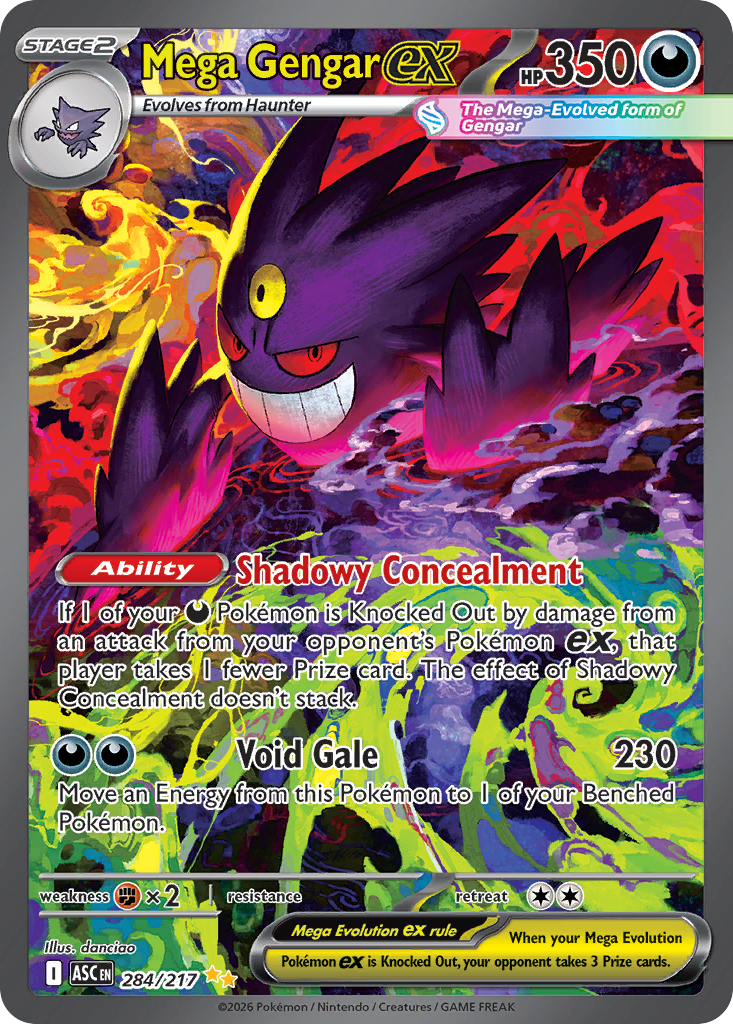
Gengar cards are a recurring target because “spooky Pokémon in a Special Illustration Rare” reliably sells, and Mega Gengar ex from Mega Evolution: Ascended Heroes (released January 30, 2026) is a current example — it’s a high-demand Special Illustration Rare from an actively-selling set, exactly the profile counterfeiters chase. Pricing data for very new secret rares is often thin or not yet synced across price trackers (which is itself worth noting: if a “graded” or “rare” listing has zero price history anywhere, treat that as a reason to slow down, not a reason to assume you found a deal), so lean more heavily on seller reputation and the physical checks above for anything from a set released in the last few months.
What to do if you get scammed
- Document everything immediately — screenshots of the listing, the seller’s profile, your payment confirmation, and clear photos of the card you received (front, back, edges, held up to light).
- File a claim through the platform first. TCGplayer’s Safeguard program accepts counterfeit reports within 30 calendar days of delivery for a full refund. eBay’s Money Back Guarantee and Authenticity Guarantee cover most legitimate disputes if you open a case rather than trying to resolve it privately with the seller.
- Dispute the charge with your card issuer or PayPal if the platform-level claim stalls or the seller has gone dark — a credit card chargeback is your strongest backup option, which is one more reason to avoid payment methods (gift cards, wires, F&F transfers) that don’t support chargebacks in the first place.
- Report the seller on the platform even after you’re refunded — it helps get repeat offenders removed before the next buyer gets hit.
- If you already paid to have it graded and it came back rejected as counterfeit, PSA will loop you into their Counterfeit Reporting Center process, which can also connect the case to law enforcement if you want to pursue it further.
FAQ
Is buying Pokémon cards on eBay safe?
Generally yes, especially from sellers with substantial feedback history and clear return policies — eBay’s Money Back Guarantee covers most disputes, and its Authenticity Guarantee program adds an extra verification layer for many higher-value cards. The risk goes up with brand-new sellers, listings using only stock photos, or any request to pay outside eBay’s checkout.
How do I check if a PSA or CGC graded card is real before buying?
Look up the certification number printed on the slab’s label using PSA’s free cert verification tool at psacard.com/cert or CGC’s equivalent lookup. If the cert number doesn’t exist, or the card/grade it returns doesn’t match what’s in the listing photos, don’t buy it — that’s a strong sign the slab is fake or the label has been swapped.
What is the “rip test” and should I actually do it?
It’s tearing a card in half to look for the black graphite layer that genuine Pokémon cards have inside their card stock. It works, but it’s destructive — you’ll never use that card again even if it turns out to be real. Use the non-destructive light test instead for anything you’re not planning to sacrifice.
Can I get a refund if I find out later that a card I bought is fake?
Usually yes, within a window. TCGplayer accepts counterfeit claims up to 30 days after delivery, and most reputable marketplaces have similar dispute windows. Keep your purchase confirmation and take clear photos of the card as soon as you receive it so you have evidence if you need to file a claim later.
Is it safe to buy Pokémon cards directly from Japan through a proxy or forwarding service?
It can be, if you’re using an established Japanese retailer or a well-reviewed proxy-buying service — counterfeit rates for cards sold directly by major Japanese card shops are generally low. The added risk is less about authenticity and more about the proxy layer itself: extra fees, shipping delays, and less recourse if something goes wrong, since you’re now dealing with two intermediaries instead of one.
The takeaway
Most Pokémon card purchases go completely fine — the hobby isn’t secretly full of fakes, and plenty of collectors buy online for years without ever hitting a counterfeit. But the cards worth the most money (Charizard, Pikachu, Gengar, and pretty much anything in a Special Illustration Rare or higher) are also the ones scammers target most, so a little friction before you buy — checking seller history, sticking to platforms with real dispute processes, and knowing the light test — pays for itself the first time it catches a problem. When in doubt on anything over $100, professional grading from PSA or CGC is the most reliable authentication you can buy, even before you factor in the resale premium a graded slab usually carries.
If you want to see what a legitimate high-value chase card looks like in hand, our breakdown of Pokémon TCG Pitch Black’s best pulls and chase cards covers real market prices and pull rates for the current Mega Evolution era, worth a read before you go shopping for that set specifically.
Related Articles
More Trading Card Game Guides
- How to Buy One Piece Card Game Safely Online (2026) (One Piece Card Game)
- How to Buy Dragon Ball Fusion World Cards Safely (2026) (Dragon Ball Super Card Game)
Comments