
※本ページはプロモーションが含まれます
If you’re asking “PSA, CGC, or BGS?” the short answer is: PSA still commands the highest resale premium and the deepest population data for Pokémon cards, CGC is usually the cheapest and fastest for mid-value cards, and BGS is worth it mainly if you want the four-part subgrade breakdown or you’re grading a card for the vintage/Japanese market where Beckett still has a following. None of that matters, though, if the card isn’t worth grading in the first place — and for most Pokémon cards in a typical collection, it isn’t. Here’s how the three companies actually compare in 2026, what grading costs and takes right now, and a real framework for deciding whether to send a card in at all.
Not financial advice. Card prices move fast, population reports change weekly, and grading company pricing gets revised without much notice. Treat every dollar figure below as a snapshot as of August 2026, not a guarantee.
- PSA vs. CGC vs. BGS at a Glance
- PSA Grading for Pokémon Cards
- CGC Grading for Pokémon Cards
- BGS (Beckett) Grading for Pokémon Cards
- Is Grading Actually Worth It? The 2x Rule
- How to Submit a Card for Grading, Step by Step
- Counterfeit Slabs Are a Real Risk in 2026
- PSA vs. CGC vs. BGS: Quick Comparison Table
- Frequently Asked Questions
- The Takeaway
- More Trading Card Game Guides
PSA vs. CGC vs. BGS at a Glance
| Company | Cheapest tier (per card) | Fastest tier (per card) | Typical mid-tier turnaround | Best known for |
|---|---|---|---|---|
| PSA | $24.99 (Value Bulk, Collectors Club only) | $9,999+ (Premium 10) | 30–50 business days (Regular/Value Max) | Highest resale liquidity, biggest population reports |
| CGC | $12/card (Bulk, 25-card minimum) | $300 (WalkThrough, ~2 days) | 20–45 business days (Economy/Standard) | Fast turnaround, sharp label design, growing Pokémon following |
| BGS (Beckett) | $14.95 (Base, no subgrades) | $124.95 (Priority, ~5 days) | 15–45 business days (Express/Standard) | Four-part subgrades (centering, corners, edges, surface) |
Pricing and turnaround estimates are pulled from each company’s published fee schedules and recent submission-time trackers as of mid-2026; all three have adjusted prices or paused tiers at least once in the past year, so double-check the live numbers on their sites before you submit.
PSA Grading for Pokémon Cards
PSA is still the default answer for anyone asking “should I grade this Charizard” in a Pokémon Facebook group, and it’s not just brand loyalty — PSA-graded Pokémon cards consistently sell for more than the same card in a CGC or BGS holder on eBay and TCGplayer, all else being equal. That liquidity premium is the whole reason people pay PSA’s prices.
2026 PSA pricing tiers (per card, as of mid-2026):
- Value Bulk — $24.99, $500 max declared value, Collectors Club membership required, ~140-160 business day turnaround
- Value — $32.99, $500 max, ~100-120 business days
- Value Plus — $49.99, $500 max, ~60-80 business days
- Value Max — $64.99, $1,000 max, ~40-50 business days
- Regular — $79.99, $1,500 max, ~30-40 business days
- Express — $149, $2,500 max, ~20-30 business days
- Super Express — $299, $5,000 max, ~7-10 business days
- Walk-Through — $599, $10,000 max, ~5-7 business days
- Premium tiers — $999 to $9,999+ for cards declared above $25,000
PSA has been dealing with a massive backlog since the 2025 grading boom — company reporting has put it around 10 million cards in the queue — so several lower tiers get paused and reopened depending on volume, and receiving alone (before grading even starts) can run about 15 business days. Check PSA’s own submission-updates page right before you submit; the tier list above has already changed more than once in 2026.
The downside: PSA is the most expensive and often the slowest of the three, and it doesn’t offer subgrades — you get one number, no breakdown of why a card landed a 9 instead of a 10.
CGC Grading for Pokémon Cards
CGC (Certified Guaranty Company) built its trading-card business on faster turnaround and a slightly more collector-friendly price floor, and it’s picked up real momentum in the Pokémon space over the last two or three years — CGC 10 “Pristine” and “Perfect 10” labels show up more and more in high-end auction listings.
2026 CGC pricing tiers (approximate, per card):
- Bulk — ~$12/card, 25-card minimum, ~40-120 business days depending on backlog
- Economy — ~$15/card, no minimum, ~20-65 business days
- Standard — mid-priced, ~10 business day published target
- Express — faster tier, ~5 business day published target
- WalkThrough — $300/card, ~2 business days
CGC raised prices across the board effective January 6, 2026, and like PSA, its published “target” turnaround and its real-world turnaround for entry tiers can diverge — Economy’s target is 20 business days but recent trackers have shown actual turnaround closer to 65 in busy periods. If speed and cost matter more to you than squeezing the last bit of resale premium out of a card, CGC is usually the better deal.
The downside: CGC-graded Pokémon cards still sell for noticeably less than PSA on the secondary market for the exact same grade, particularly for English-language cards. That gap has been narrowing, but as of 2026 it hasn’t closed.
BGS (Beckett) Grading for Pokémon Cards
Beckett’s whole pitch is the subgrade system — every card gets individual marks for centering, corners, edges, and surface, then those roll up into the overall Black Label (a true BGS 10 with four perfect 10 subgrades) or a standard numeric grade. That granularity is genuinely useful if you’re trying to figure out exactly why a card missed gem mint, or if you collect vintage cards where centering issues are common and a subgrade breakdown helps you compare near-identical copies.
2026 BGS pricing tiers (per card):
- Base — $14.95 without subgrades, $17.95 with all four subgrades
- Standard — $34.95 (subgrades included), ~45 business days
- Express — $79.95, ~15 business days
- Priority — $124.95, ~5 business days
The downside: BGS has the smallest footprint in the modern Pokémon market of the three companies. A BGS 10 or even a Black Label doesn’t reliably outsell a PSA 10 of the same card, and pull rates for a true Black Label (four perfect subgrades) are brutal, which makes chasing one a bit of a vanity project unless the card is genuinely flawless.
Is Grading Actually Worth It? The 2x Rule
The rule most experienced graders use, and the one I’d tell a friend: only submit a card if a realistic PSA 10 (or CGC/BGS 10 equivalent) sale price is at least double the raw near-mint price, after you subtract the grading fee, shipping both ways, and a protective case. Below that line, you’re often working for free or actually losing money once a card comes back a 9 instead of a 10 — which, for modern cards with any print-line or centering issues, happens a lot more than people expect.
Two real examples, priced as of August 2026:

Charizard ex (Special Illustration Rare, #199/165, Pokémon 151) — this is the borderline case. Raw copies have been trading around $250-$300 on TCGplayer as of mid-2026, down from higher prices during the 2025 151 hype. PSA 10 sales have been landing around $450-$700, a big drop from 2025 peaks above $1,200 as the whole 151 market cooled off. Run the math: a $79.99 Regular-tier PSA grade plus a Card Saver and return shipping eats a meaningful chunk of that $150-$400 spread, and if the card comes back a 9 instead of a 10 (PSA 9s for this card sell much closer to raw price), you can end up barely breaking even or losing money. This is exactly the kind of card where grading is a bet, not a sure thing.
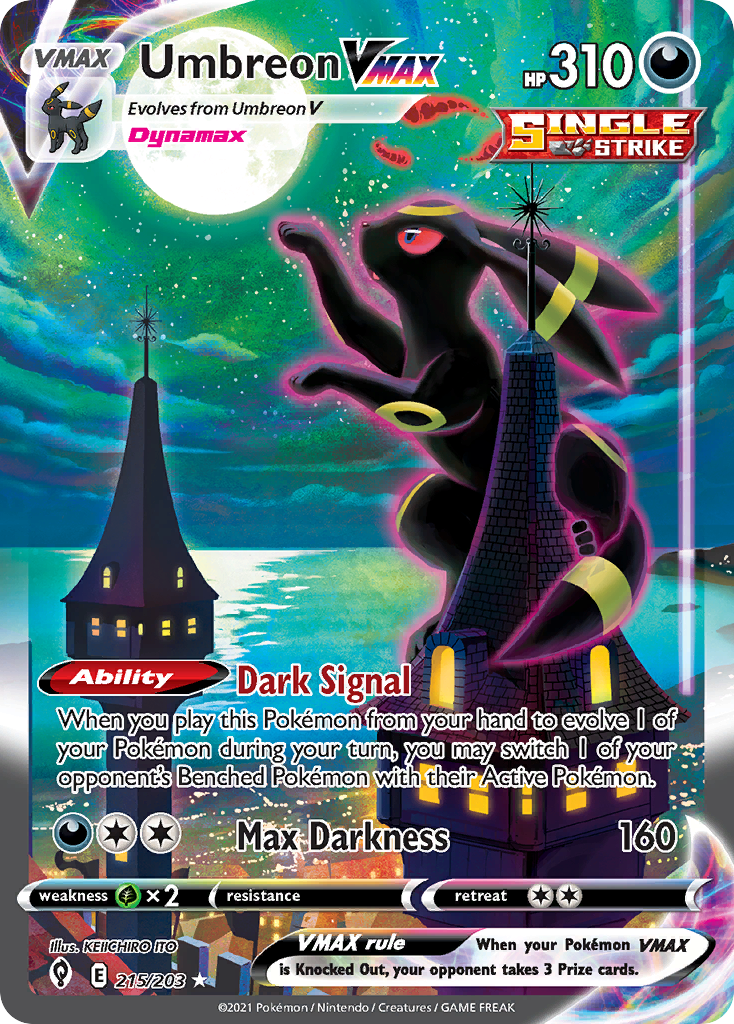
Umbreon VMAX (“Moonbreon,” Alternate Art Secret, #215/203, Evolving Skies) — this one clears the 2x rule more comfortably. Raw near-mint copies have been going for roughly $400-$800 depending on centering, while PSA 10s have been selling in the $1,200-$1,800 range as of 2026. Evolving Skies is also known for centering issues on the alt-art VMAXes, which keeps the PSA 10 population lower relative to submissions (roughly a 40-45% gem-rate by some population trackers) — scarcity that supports the premium. This is the more defensible grading candidate of the two, especially if you already own a well-centered raw copy.
The takeaway isn’t “grade everything expensive” or “never grade anything under $500” — it’s do the raw-vs-graded math for the specific card before you pay to submit it, using recent sold listings (not just asking prices) on both sides.
How to Submit a Card for Grading, Step by Step
- Pre-screen the card yourself. Check centering (ideally 55/45 or better front and back), look for whitening on the edges/corners under bright light, and check the surface for scratches or print lines. If you can already see a flaw with the naked eye, a 10 probably isn’t happening.
- Sleeve it properly. Penny sleeve first, card facing the smooth side, then into a semi-rigid holder like a Card Saver 1. Don’t use a toploader alone for shipping — it’s not enough protection and some companies will flag it.
- Create an account and a submission order on the grading company’s site (PSA, CGC, or Beckett all use online order systems now). Pick your service tier, list each card with set name/number, and declare a value for insurance — under-declaring caps what you can claim if a card is lost or damaged in transit.
- Consider a membership if you’ll submit regularly. PSA’s Collectors Club ($99/year as of 2026) unlocks its cheapest Bulk tier; CGC and BGS have similar loyalty tiers that unlock lower per-card pricing.
- Ship with tracking and insurance. All three companies grade the card in the condition it arrives in — they won’t compensate you for shipping damage that happens before it reaches them, only for damage that happens in their custody.
- Track and wait. Turnaround times above are estimates, not guarantees, and all three companies have been running behind published targets through 2026 during high submission volume.
If you’d rather not deal with any of this, sealed and pre-graded product is the alternative — a PSA Graded Card Display Case for storing slabs once they come back, or simply buying a card already graded, sidesteps the submission process entirely (see the counterfeit warning below before doing that, though).
Counterfeit Slabs Are a Real Risk in 2026
This is the part a lot of grading guides skip: fake graded cards are a growing problem, not a rare edge case. PSA’s own fraud reporting has flagged counterfeit Pokémon cards up roughly 125% year-over-year and altered Pokémon cards up around 400%, and that’s before counting fake slabs — real cards sealed in convincing counterfeit holders, or genuine holders with swapped-in cards. Before buying a graded Pokémon card online:
- Verify the cert number directly on the grading company’s official lookup tool (psacard.com, cgccards.com, or beckett.com) — don’t trust a screenshot, check it yourself.
- Check the label details match the card — set, number, and grade should line up exactly with what the cert lookup shows.
- Buy from platforms with authenticity protection. eBay’s Authenticity Guarantee now covers graded cards over $250, which is one of the more reliable backstops if something turns out to be fake.
- Be extra cautious with high-value slabs from unfamiliar sellers — a counterfeit is far more worth making for a $1,000+ card than a $20 one.
PSA vs. CGC vs. BGS: Quick Comparison Table
| Factor | PSA | CGC | BGS |
|---|---|---|---|
| Cheapest entry price | $24.99/card (membership required) | ~$12/card (25-card min) | $14.95/card |
| Fastest turnaround | 5-7 business days ($599) | ~2 business days ($300) | ~5 business days ($124.95) |
| Subgrades offered | No | No (grade breakdown on label only) | Yes, all four categories |
| Resale premium (Pokémon, 2026) | Highest | Growing, still behind PSA | Smallest of the three |
| Best for | Chase cards you plan to sell | Mid-value cards, faster cash flow | Vintage cards, centering-sensitive comparisons |
Frequently Asked Questions
Is it worth grading a Pokémon card worth less than $50?
Almost never. Even PSA’s cheapest tier ($24.99-$32.99) plus shipping both ways can eat 60-80% of a sub-$50 card’s value before you even factor in the risk of a lower-than-hoped grade. Cards in that range are usually better kept raw in a sleeve and toploader unless you’re grading a large batch for the sentimental or set-completion value rather than resale.
Does a graded card lose value if the set gets reprinted?
Reprints (like Pokémon Center’s Classic Collection or periodic special-set reprints) can soften prices for the specific card and rarity being reprinted, since supply increases. It’s a real risk for chase cards from recent sets — something to factor in before grading a card purely as an investment, since a reprint announcement can happen with little warning.
Do PSA-graded cards stay tournament legal?
Yes — graded slabs are legal to play with at most local tournaments as long as the card inside is a Standard or Expanded legal card and the slab doesn’t obscure gameplay-relevant information, though many players still prefer to play with a raw copy and keep the graded slab for display. Always check the specific event’s rules, since some smaller stores restrict slabs at the table.
How can I tell if a graded card I’m buying online is authentic before it arrives?
Ask the seller for the cert number and check it yourself on the grading company’s official site before paying — a legitimate cert number will show the exact card, set, and grade. If a seller won’t provide a clear photo of the cert number and label, or the listing photos look inconsistent with the described grade, treat it as a red flag.
Should I crack a graded card out of its slab?
Only if you have a specific reason (re-grading for a better tier, planning to play with it, or you got a lower grade than expected and want to try again elsewhere). Cracking removes the grading company’s guarantee and any resale premium tied to that specific slab, and re-submission costs money and time with no guarantee of a better result.
The Takeaway
For most collectors, PSA remains the safest default for anything you actually intend to resell, thanks to its market-leading liquidity — but it’s also the priciest and often the slowest option in 2026, with real backlog issues still working themselves out. CGC is the practical choice for faster turnaround and lower cost on mid-value cards, and BGS earns its keep mainly through subgrades for vintage or centering-sensitive pieces. Whichever company you pick, run the 2x rule on the specific card first, verify any graded card you buy secondhand, and remember that grading is a bet on a card’s future resale value, not a guaranteed return.
Looking for cards actually worth considering for grading from a current set? Check out our breakdown of Pokémon TCG Pitch Black: Best Pulls & Chase Cards for real market prices on the newest chase cards.
More Trading Card Game Guides
- PSA vs BGS vs CGC: One Piece Card Game Grading Guide (One Piece Card Game)
- PSA vs BGS vs CGC: Grading Dragon Ball Fusion World Cards (Dragon Ball Super Card Game)
- Grading Naruto Cards in 2026: Is It Actually Worth It? (Naruto Card Game)

Comments