※本ページはプロモーションが含まれます
Disclosure: This post contains affiliate links. If you buy through them, we may earn a commission at no additional cost to you. Learn more.
Pokémon TCG Live is the free official digital client for the actual, real-world Pokémon Trading Card Game — not a simplified spinoff like Pokémon TCG Pocket. If you’ve got physical booster packs sitting around, the code card tucked inside each one unlocks a digital version of those same cards, and from there you can build a deck, queue into ranked matches against players worldwide, and practice the exact rules and interactions you’d use at a local tournament. It’s free, it runs on PC, Mac, iOS, and Android, and as of August 2026 it’s genuinely the fastest way to learn the game without burning through real cardboard. Here’s how to actually use it, code redemption through ranked play, plus where it falls short of the physical hobby.
What Pokémon TCG Live Actually Is
Pokémon TCG Live (PTCGL) replaced the older Pokémon TCG Online in 2023 and is built to mirror the paper game move for move — same Standard-format card pool, same turn structure, same Prize card win condition. The client automates the tedious parts (shuffling, damage counters, checking whether an attack is legal) so new players can focus on learning what cards actually do instead of fumbling through a rulebook.
It’s a different product from Pokémon TCG Pocket, which is Creatures Inc.’s separate mobile-first collecting game with simplified rules, 5-10 minute matches, and no real deck-building — Pocket is closer to a gacha collector app. TCG Live is the one that actually teaches you the competitive game people play at Regionals and Worlds. If your goal is to eventually play in person or understand what your local game store’s Friday Night Standard event is doing, Live is the one to install.
Account setup ties to a free Pokémon Trainer Club account (the same login used for the official Pokémon website and Pokémon GO’s parent ecosystem), and progress syncs across every platform, so you can start a match on your phone and finish it on desktop.
Redeeming Physical-to-Digital Codes
This is the feature that actually connects your binder to your account. Every current Pokémon TCG product — booster packs, Elite Trainer Boxes, theme/battle decks, tins — includes a code card, usually a small insert with a scratch-off or printed alphanumeric code and a QR code.
To redeem:
- Open Pokémon TCG Live and log in.
- Go to the Shop tab, then select Redeem.
- Either type the code manually (dashes aren’t required) or use your device’s camera to scan the QR code.
- Hit Submit Code, review what you’re getting, then select Collect All (or Claim Now, depending on platform version) to add it to your collection.
A single booster pack code grants a 5-card digital pack with better-than-paper rare odds, since Live doesn’t need to physically print scarcity — it’s mostly there to give buyers a reason to prefer sealed product with codes over loose singles. Theme and battle deck codes hand you the full 60-card decklist plus playmat/sleeve cosmetics.
The catches: each code is one-time use and tied to one account, so don’t buy “used” sealed product expecting the code to still work — sellers sometimes photograph and redeem codes before reselling opened packs, which is a real scam pattern to watch for when buying online (see our guide on How to Buy Pokémon Cards Online Safely). There are also soft caps: booster codes are limited to roughly 400 redemptions per expansion, and each battle/theme deck code can only be redeemed four times per account. Past four copies of any non-Basic-Energy card, extra pulls convert into Trade Credits instead of duplicate cards — so don’t expect to hoard 20 copies of a chase pull for online trading, because there’s no trading system in TCG Live at all.
Building a Deck for Free
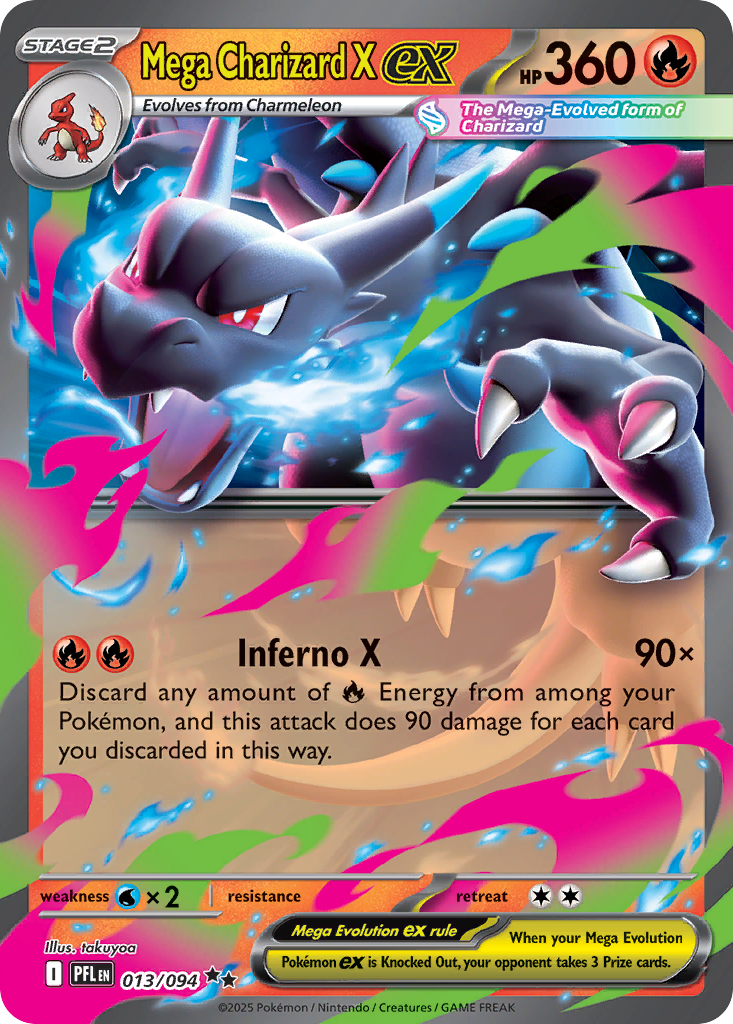
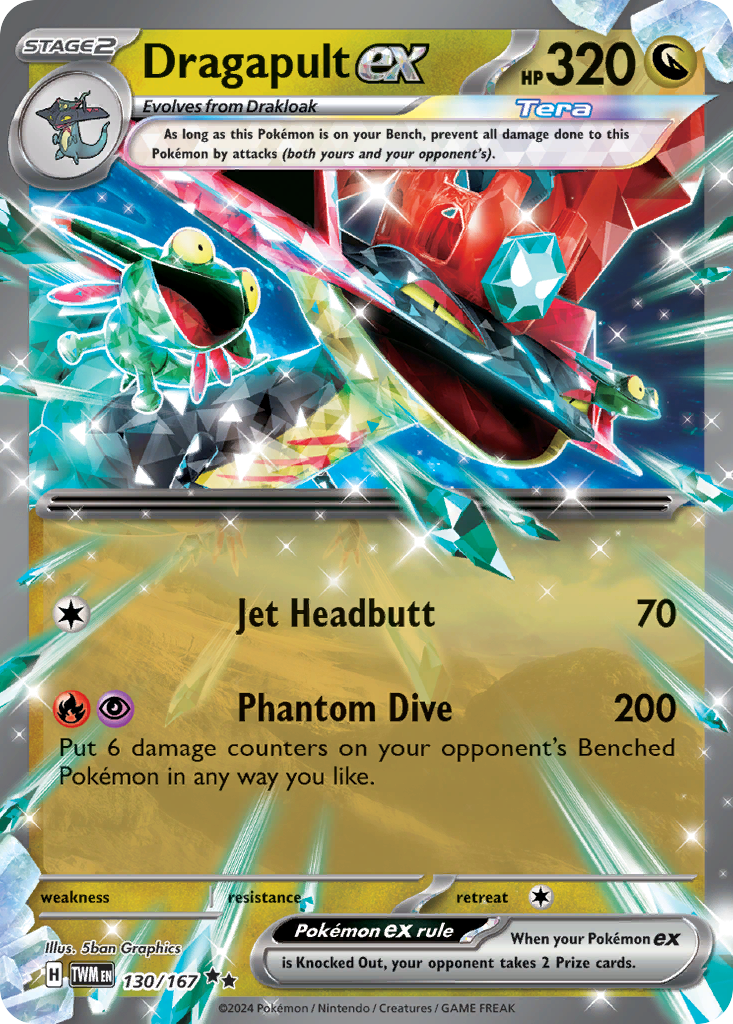
New accounts start with a choice of pre-built starter decks rather than a blank collection. As of the Mega Evolution: Perfect Order launch in early 2026, the eight standing starter decks are built around Dragapult ex, Mega Charizard X ex, Mega Lucario ex, Mega Manectric ex, Mega Sharpedo ex, Mega Venusaur ex, N’s Zoroark ex, and Steven’s Metagross ex — each a legal, tournament-playable 60-card list, not a watered-down “starter” version like the old Pokémon TCG Online decks were.

From there, deck building happens in the Collection → Decks menu, where you drag cards from anything you own into a 60-card list, same deckbuilding rules as paper (max four copies of any card besides Basic Energy). If you’re missing pieces for a deck you want to build, you craft them with Trade Credits, a currency earned from opening duplicates in packs and decks. Costs scale with rarity — a Common might cost a handful of Credits, while a Special Illustration Rare can run into the hundreds, which is where the “free-to-play” pitch gets a little less generous. Reviewers who’ve tracked hundreds of opened packs have noted it’s genuinely possible to end up sitting on lots of bulk without enough Credits to finish a specific competitive list, so treat Live as “cheaper than paper,” not “free the way Pocket feels free.”
You can also just buy digital packs and decks directly with Crystals, the premium currency (earned slowly for free — around 60/day from daily objectives — or purchased with real money), if you’d rather skip the grind. A digital version of a full Elite Trainer Box typically runs somewhere in the 1,000-3,500 Crystal range depending on the product, which is worth knowing before you assume “digital” automatically means “cheap.”
Ranked Ladder Basics
Once you’ve got a legal deck, Battle mode has both casual and ranked queues. The ranked ladder runs in seasons that reset monthly and is structured as six leagues, each with its own named tiers (using specific Pokémon as rank icons): Nest League, Quick League, Poké League, Great League, Ultra League, and Arceus League — Arceus League is the top tier, roughly analogous to “Masters” in other competitive ladders.
You gain and lose Rank Points per match, with win streaks granting a small bonus (an extra point or two per consecutive win at lower leagues), and losses costing more the higher you climb — by Ultra/Arceus League, a single loss can meaningfully set you back. As of mid-2026 the ladder also caps how far you can fall at season’s end (a maximum drop of a handful of tiers rather than a full reset to zero), so a bad losing streak in your placement matches won’t erase a whole season of climbing. Playing at least five ranked matches in a season locks in end-of-season rewards for whatever league you reached — cosmetics, Trainer Points, Trade Credits, booster packs, and at the very top, actual Hyper Rare card unlocks.
Ranked is genuinely useful practice: since it matches you against real decks running the current Standard-legal card pool (as of August 2026 that means the post-rotation, Sword & Shield-era-and-earlier cards are gone, no more V/VMAX or Radiant Pokémon), you’re testing against the same field you’d see at a real tournament, not a bot. For a snapshot of what’s actually winning right now, see our Pokémon TCG Standard Tier List: July 2026 Meta Guide.
How TCG Live Fits Alongside the Physical Game
TCG Live isn’t a replacement for paper Pokémon — think of it as a free practice tool and a bonus for people who already buy physical product. A few honest tradeoffs to know before you lean on it:
- It’s one-directional. Codes convert physical to digital, never the other way. You can’t “cash out” a digital pull into a real card, so don’t buy packs purely for the digital reward and expect resale value from what you open online.
- Bugs and performance are a real complaint. App Store and community forum reviews through 2026 still flag client crashes, animation stutter, and occasional rules-engine hiccups, especially on older mobile hardware — it’s improved a lot since the rocky 2023 launch, but it’s not as polished as Pocket.
- No player trading. Everything you get is either pulled, crafted with Credits, or bought with Crystals — there’s no marketplace or trade window between accounts, unlike the old PTCGO.
- It teaches the real rules, which is the actual selling point. If you’re planning to play at a local league or Regional, practicing on Live against real decklists is a far better use of your time than only playing casually with friends who might not know every ruling.
If you’re brand new to the hobby overall, our Pokémon TCG Beginner’s Guide 2026: What to Buy First covers what to actually buy in stores before you touch the app. A physical starter like Pokémon TCG Battle Academy is still the better first purchase if you’re learning with another person face-to-face, since it comes with a scripted tutorial match — but its code card also redeems in Live, so you genuinely get both.
Digital vs. Physical vs. Pocket at a Glance
| Pokémon TCG Live | Physical (Paper) TCG | Pokémon TCG Pocket | |
|---|---|---|---|
| Cost to start | Free | $4-$170+ per product | Free |
| Rules depth | Full competitive ruleset | Full competitive ruleset | Simplified, no deckbuilding |
| Match length | 15-30 min | 15-40 min | 3-6 min |
| Trading | None | Yes, freely | Limited, rarity-gated |
| Resale/collectible value | None (digital only) | Real secondary market | None (digital only) |
| Best for | Practicing real rules/meta free | Collecting, in-person play, resale | Quick casual collecting |
Card values and market conditions referenced here (Crystal costs, Elite Trainer Box prices) reflect August 2026 pricing and are not financial advice — Pokémon TCG digital economies and real-world card prices both shift often, so treat any specific figure as a snapshot rather than a guarantee.
Frequently Asked Questions
Is Pokémon TCG Live actually free to play?
Yes. You can download it, build decks from starter cards, and play ranked without spending money. Progressing faster or building high-end competitive decks without physical code redemptions takes longer, since Trade Credits from packs are the main free path to rarer cards.
Do Pokémon TCG Live codes expire?
Individual product codes don’t carry a hard expiration date as of 2026, but they’re single-use — once redeemed on one account, that specific code is dead. Promotional codes (given out at events or via social media) do typically expire on a stated date.
Can I trade cards with other players on TCG Live?
No. Unlike the discontinued Pokémon TCG Online, Live has no trading system. Everything comes from packs, deck codes, crafting with Trade Credits, or direct purchase with Crystals.
Does playing Pokémon TCG Live help if I mainly play the physical game?
Yes, especially for learning timing and rules interactions — the client won’t let you make an illegal play, which is the fastest way to internalize things like Special Condition ordering or when you can use Trainer cards. It’s a strong supplement, not a replacement, since it can’t replicate in-person deck sleeving, shuffling, or tournament pressure.
Is Pokémon TCG Live the same thing as Pokémon TCG Pocket?
No, they’re built by different teams for different goals. Live mirrors the full paper competitive game (60-card decks, Standard format, Prize cards). Pocket is a separate, simplified mobile collecting game with 20-card decks and much shorter matches — it’s not a valid way to practice for real-world tournaments.
The takeaway: Pokémon TCG Live is worth installing the same day you buy your first booster box — scan the code cards as you open packs, build one of the eight current starter decks, and queue into ranked to actually learn the game against real decklists. Just don’t expect it to replace the physical hobby: there’s no trading, no resale value, and no substitute for shuffling real cardboard across a table from another person.
Related Articles
- Pokémon TCG Beginner’s Guide 2026: What to Buy First
- Pokémon TCG Mega Evolution Era, Ranked (ME01–ME05)
More Trading Card Game Guides
- One Piece Card Game Colors Explained: A Beginner’s Guide (One Piece Card Game)
- Dragon Ball Fusion World Beginner’s Guide (2026 Edition) (Dragon Ball Super Card Game)
Comments