※本ページはプロモーションが含まれます
The 2026 Pokémon TCG World Championships haven’t happened yet — they run August 28-30, 2026 at the Chase Center in San Francisco — so this is a preview, not a recap. Based on the last few months of Regional and International results, Dragapult ex/Dusknoir (increasingly paired with Blaziken ex) is the deck to beat, but Pitch Black’s Mega Excadrill ex and a genuinely new Hide ‘n’ Sneak archetype give the field real ways to fight back. Here’s what’s actually going into the biggest event of the competitive year, and why it matters for the months of Standard play that follow.
A quick disclaimer before we get into it: nothing here is financial advice. Card prices and competitive standings shift constantly, and everything below reflects research and reporting available as of early August 2026 — some of it could look different by the time Worlds actually wraps.
The basics: when, where, and how it works
Worlds 2026 runs August 28-30 at the Chase Center in San Francisco, with a companion “PokémonXP” fan event and Pokémon Center pop-ups running alongside it at the nearby Moscone Center. It’s the culmination of the 2025-26 competitive season across TCG, VGC, Pokémon GO, and Pokémon UNITE.
The TCG Masters format follows the structure it’s used for the past few years: Day 1 is Swiss rounds, Day 2 continues Swiss and cuts to a Top 8 single-elimination bracket best-of-three, with the finals played on Day 3. Every match at Worlds is best-of-three — no single-game upsets deciding a title.
Who actually qualified
Worlds invites work on a Championship Points system with regional caps for the 2025-26 season: the top 135 Masters players from USA & Canada, the top 135 from Europe, the top 125 from Latin America, the top 20 from Oceania, and the top 10 from Middle East & South Africa all get direct invites. On top of that, 1st place at every Regional Championship, 1st through 4th place at every International Championship, and the top 4 finishers from the previous World Championships all earn automatic seats — those direct invites don’t stack, so if a top-4 finisher from Worlds also wins a Regional later, the spot passes down to the next-highest finisher instead.
That last rule is the interesting one this year: Riley McKay, the reigning 2025 World Champion (he beat American player Justin Newdorf 2-0 in the Anaheim final), is automatically back to defend his title — along with Newdorf and the rest of last year’s top 4. The catch is that McKay’s title-winning list doesn’t exist anymore. He won with Gardevoir ex from the original Scarlet & Violet base set, and that card carries a G regulation mark, which means it rotated out of Standard on April 10, 2026, along with the rest of Scarlet & Violet, Paldea Evolved, Obsidian Flames, 151, and Paradox Rift. Whatever McKay plays in San Francisco, it won’t be a repeat of his winning list — a good reminder that even a World Champion has to rebuild from scratch when rotation hits.

Other notable qualifiers include James Kowalski, who won the North America International Championships in New Orleans (June 12-14, 2026) with Lillie’s Clefairy ex, and Edwyn Mesman of the Netherlands, who took the Europe International Championships in London (February 13-15, 2026) and earned a direct Worlds invite in the process. Mesman’s EUIC run was played entirely in the old pre-rotation format, though, so his winning list is just as outdated as McKay’s by now.
The format going into Worlds
Standard rotated on April 10, 2026 for in-person events, cutting every card with a G regulation mark. Only H, I, and J regulation marks are legal now — Temporal Forces onward, through Twilight Masquerade, Shrouded Fable, Stellar Crown, Surging Sparks, Prismatic Evolutions, Journey Together, Destined Rivals, Black Bolt/White Flare, and the full Mega Evolution era (Mega Evolution, Ascended Heroes, Perfect Order, Chaos Rising, and Mega Evolution: Pitch Black, which released July 17, 2026 — six weeks before Worlds, plenty of time for it to shake out competitively).
Losing the original Gardevoir ex and Charizard ex in the same rotation created a real power vacuum, and Dragapult ex — which barely lost anything — walked straight into it. If you want the fuller month-by-month tier breakdown, we covered it in our Pokémon TCG Standard Tier List: July 2026 Meta Guide.
The favorite: Dragapult ex / Dusknoir
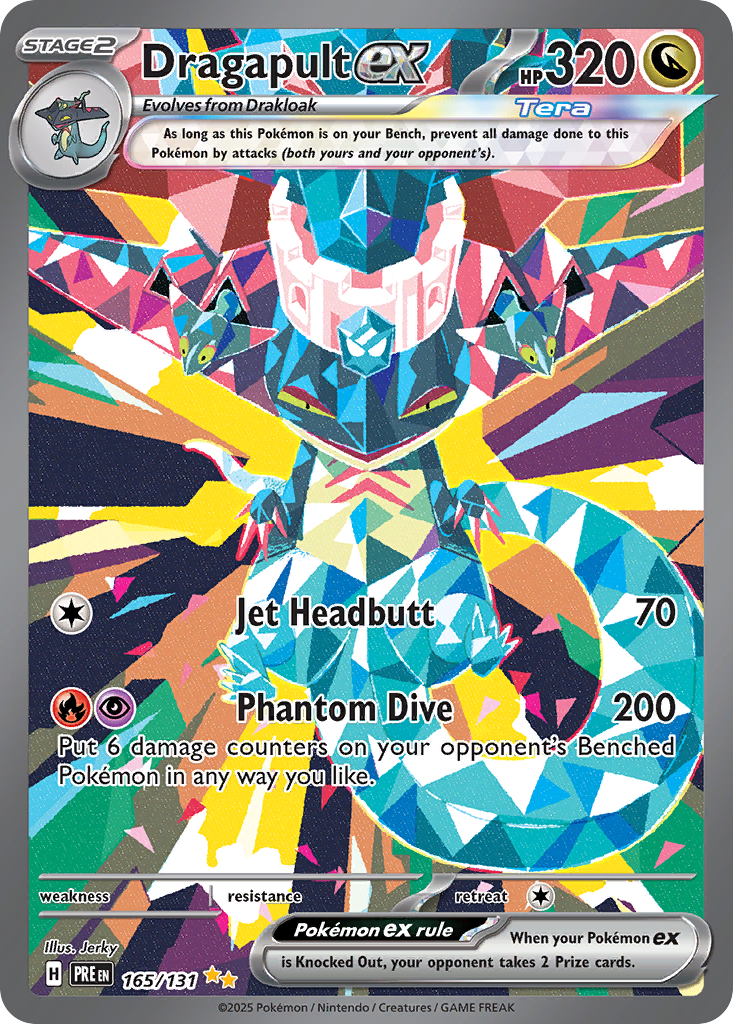
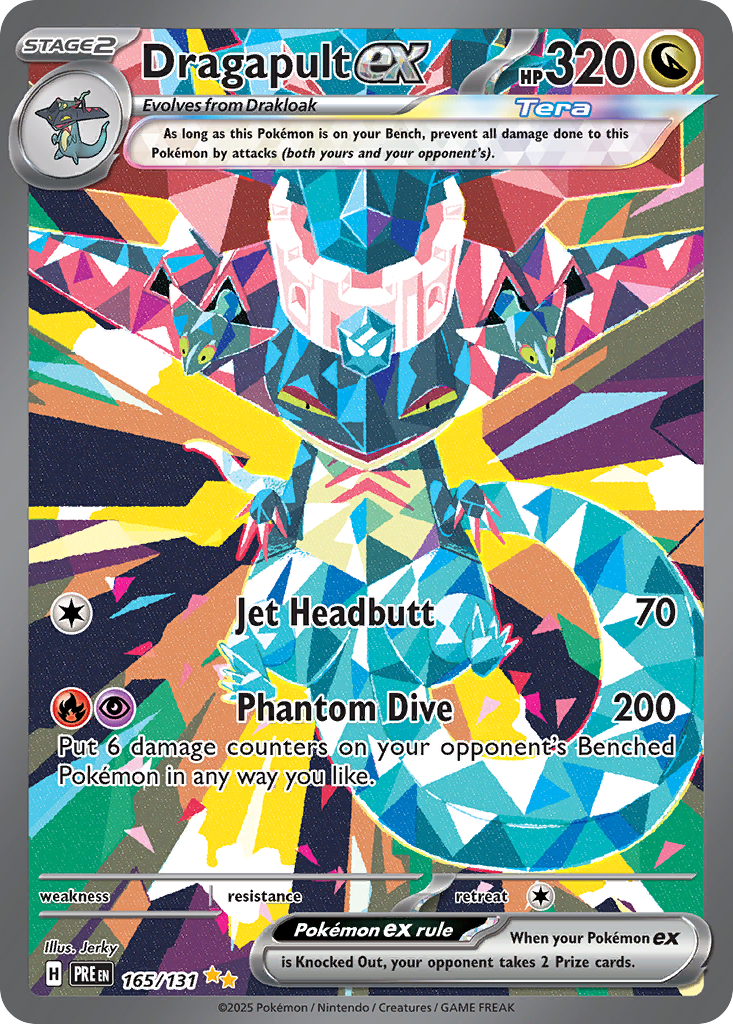
PokeBeach’s August 4 Worlds metagame forecast is blunt about it: Dragapult is “undeniably the best archetype in the format,” and it’s the deck most top players are expected to bring. The plan hasn’t changed much since rotation — hide behind cheap early attackers, evolve into multiple Dragapult ex for consistent Jet Headbutt damage, and close games with Dusknoir’s Cursed Blast Ability for a 130-damage snipe.
What has changed is the tech: a growing number of lists are pairing Dragapult with Blaziken ex from Journey Together (#24). Its Seething Spirit Ability lets you re-attach a Basic Energy from your discard pile once per turn, which smooths out Dragapult’s energy curve and, more importantly, gives the deck a genuinely strong answer to Mega Excadrill ex and Hide ‘n’ Sneak — two of the decks most likely to be teched specifically to beat plain Dragapult.
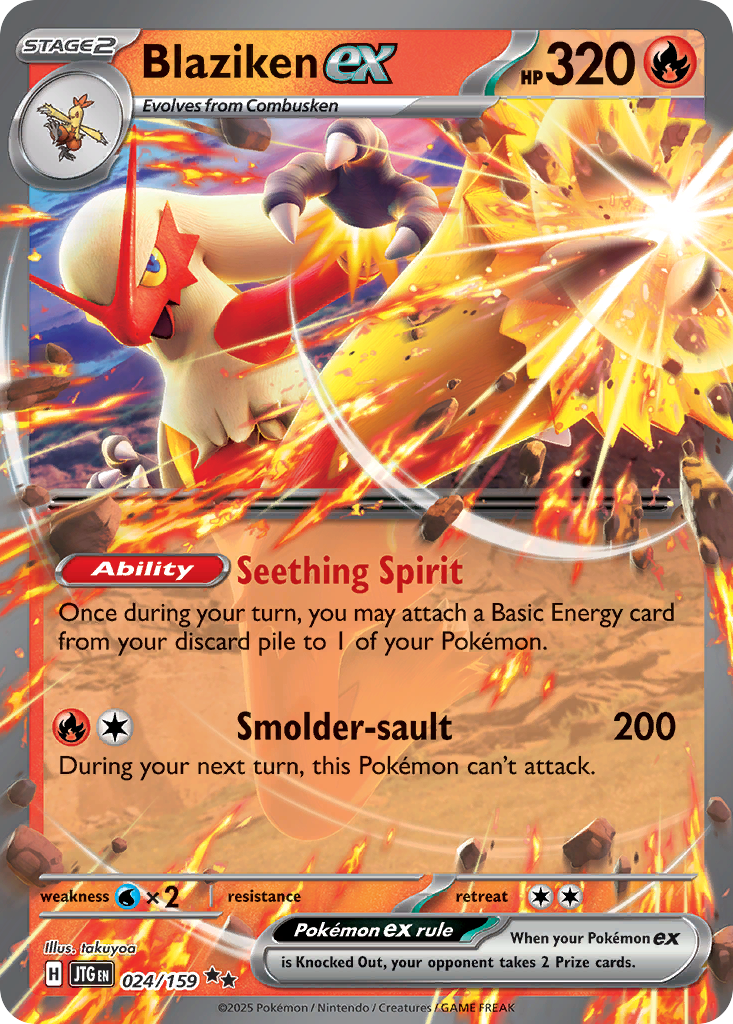
Why it’s the favorite: it lost almost nothing to rotation, it’s cheaper to pilot correctly than most ex-heavy decks, and adding Blaziken ex patches its worst matchups.
The catch: Dragapult has been the format’s default deck for four-plus months now, which means every serious Worlds competitor has had all summer to prepare a plan against it. A deck that’s popular for this long stops beating unprepared opponents and starts having to win skill-testing mirror matches and grinding, well-teched anti-Dragapult lists instead.
The challengers
Mega Excadrill ex (Pitch Black)
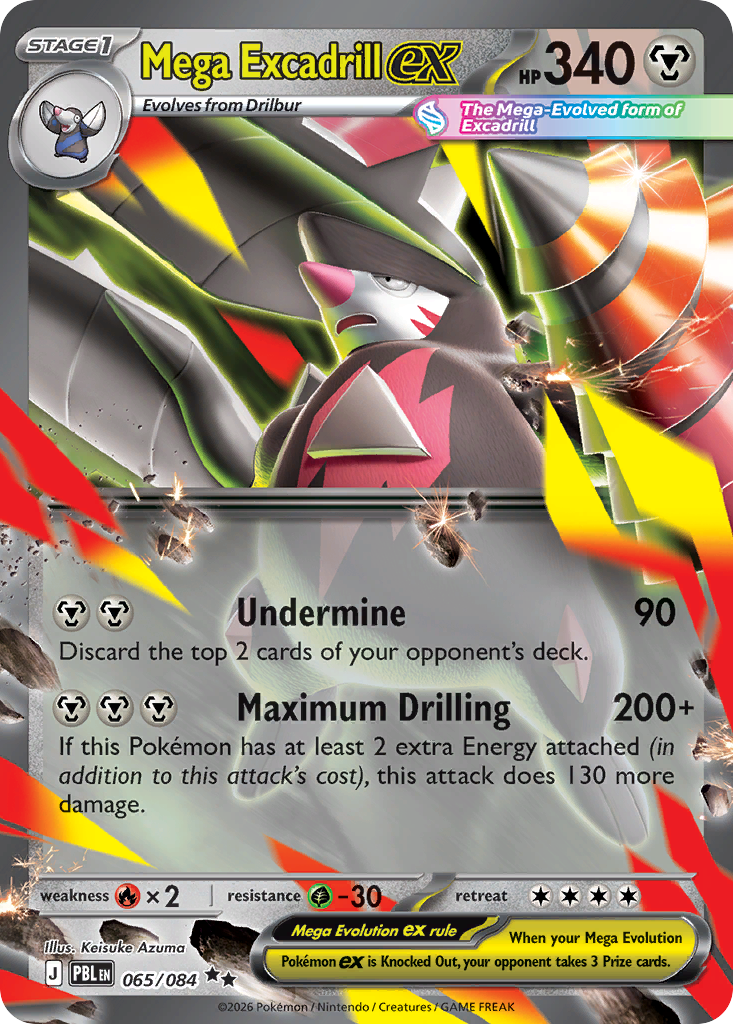
Mega Excadrill ex is one of the most hyped cards out of Pitch Black, and it’s easy to see why: 340 HP as a Stage 1, and its Maximum Drilling attack can hit for up to 330 damage once you’ve attached at least two Energy beyond the attack’s cost. It’s a genuine one-shot threat to almost anything in the format.
Why it’s a real Worlds contender: raw damage output that outpaces most of the format, and it punishes decks that can’t answer a 330-damage swing.
The catch: it’s still a Stage 1 that needs specific Energy counts online to hit its top number, and a deck built entirely around one attacker is vulnerable to any disruption that slows its setup down. Fast, low-setup decks can also just race it before it gets rolling.
Hide ‘n’ Sneak
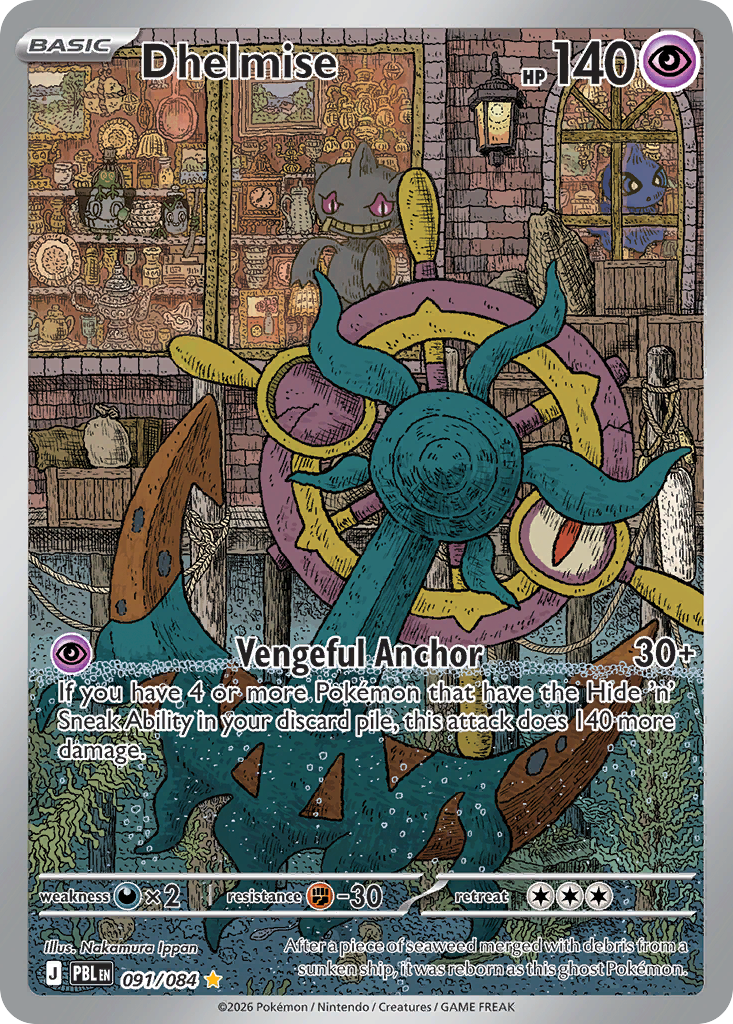
This is the newest archetype in the format, built around the Banette and Sinistcha lines sharing a “Hide ‘n’ Sneak” Ability that blocks damage placement from opposing Abilities and certain attacks — direct counters to exactly the kind of snipe damage Dragapult/Dusknoir relies on. It already made the finals of the Pokémon Japan Championships 2026, and the most efficient build leans on Dhelmise, which hits for 170 damage off a single Psychic Energy via Vengeful Anchor.
Why it matters for Worlds: it’s a legitimately new answer to the format’s most damage-reliant strategies, and it’s proven itself on a real competitive stage already.
The catch: it’s a slower, more resource-intensive deck to set up than Dragapult, and the results so far are limited to a handful of Asia-region events — it hasn’t been battle-tested against the full range of Western tech choices yet, and Worlds fields tend to be much deeper than any single Regional.
The sleeper and the tech that didn’t pan out
PokeBeach’s “boring deck” pick for Worlds is, of all things, Mega Lucario ex — a deck that’s underperformed at events since rotation but has favorable matchups against the specific decks expected to be popular in San Francisco. It’s a good reminder that Worlds metagames don’t always look like the Regional metagames leading up to them, since every competitor already knows how to pilot their own deck well; the question becomes who has the best matchup spread, not who has the flashiest new card.
On the flip side: Alakazam was heavily hyped this spring as an Energy-disruption tech against Dragapult, but it fizzled at NAIC in June — it put only two copies into the Top 64 and none into the Top 8, because experienced Dragapult players simply teched around it with cards like Special Red Card and sat on Stadiums to guarantee their attacks anyway. Worth remembering before you build around any single “this beats the best deck” headline you read online — a tech that only beats inexperienced pilots isn’t a real Worlds-level answer.
Quick reference table
| Deck | Key set | Signature card rarity | Approx. market price (Aug 2026) | Worlds readiness |
|---|---|---|---|---|
| Dragapult ex / Dusknoir (+ Blaziken ex) | Prismatic Evolutions / Journey Together | Special Illustration Rare / Double Rare | $30-50 (Dragapult ex SIR) | Proven, most-played, most-teched-against |
| Mega Excadrill ex | Pitch Black | Double Rare | Still settling post-release | High ceiling, setup-dependent |
| Hide ‘n’ Sneak (Dhelmise/Banette) | Pitch Black | Illustration Rare | Still settling post-release | New but proven in Asia (Japan Champs finals) |
| Mega Lucario ex | Mega Evolution | Double Rare | Budget, underperforming lately | Anti-meta sleeper pick |
| Gardevoir ex (2025 champion’s deck) | Scarlet & Violet | Special Illustration Rare | $70-85 (rotated, collector value only) | Not tournament-legal anymore |
Prices are approximate market snapshots as of early August 2026 pulled from TCGplayer-linked data — they move fast, especially around a major event like Worlds, so treat these as a ballpark, not a quote.
What this means for Standard after Worlds
Worlds results tend to set the tone for the rest of the competitive year, since there’s no scheduled Standard rotation again until next spring. If Dragapult ex wins again, expect an even more Dragapult-saturated Regional season through the fall — and expect Mega Excadrill ex and Hide ‘n’ Sneak, if they perform well, to go from “hyped new set cards” to “cards you have to build a plan around” almost overnight. If either challenger does take it down on the biggest stage, that’s the signal that usually convinces a big chunk of the ladder to jump ship within a few weeks.
It’s also worth knowing that Pokémon typically releases official World Championship Deck products a few months after the event, reprinting close-to-tournament versions of the winning list so regular players can buy in without hunting down singles individually — useful to keep an eye on if you want to actually play whatever wins, without chasing secondhand cards at inflated post-Worlds prices.
FAQ
When and where are the 2026 Pokémon TCG World Championships?
August 28-30, 2026, at the Chase Center in San Francisco, California, with companion fan programming at the nearby Moscone Center.
How do you qualify for Pokémon TCG Worlds?
Mostly through Championship Points earned at Regional and Special Championships during the season, with regional invite caps (for example, the top 135 Masters players from the US & Canada). Winning a Regional outright, finishing top 4 at an International Championship, or finishing top 4 at the previous year’s Worlds also grants a direct invite regardless of your point total.
Is Riley McKay defending his 2025 title with the same deck?
No — he’s automatically invited as the reigning champion, but his 2025 winning deck was built around the original Gardevoir ex from Scarlet & Violet, which rotated out of Standard on April 10, 2026. Whatever he plays in San Francisco will be an entirely new build.
Will the Worlds result change the Standard meta afterward?
Usually, yes, at least short-term. There’s no scheduled rotation again until next spring, so whatever wins (or over- or under-performs) at Worlds tends to shape Regional Championship metas through the rest of the fall.
Where can I watch Worlds 2026?
Play! Pokémon livestreams the TCG competition, typically through the official Pokémon YouTube and Twitch channels, with English commentary covering the Top 8 on Day 3 in detail.
Takeaway
Going into San Francisco, Dragapult ex/Dusknoir is the deck everyone else is trying to beat, and pairing it with Blaziken ex looks like the safest way to have both a strong deck and a plan against the other strong decks. But this is also the most interesting Worlds field in a while, precisely because Pitch Black introduced two genuinely new tools — Mega Excadrill ex’s raw power and Hide ‘n’ Sneak’s damage-prevention gimmick — with real results (a Japan Championship finals run) to back them up before the biggest event of the year. Whichever of these wins in San Francisco will almost certainly define what Regional Championships look like for the rest of 2026, so it’s worth paying attention even if you’re not the one playing in the Top 8.
If you want to build toward Worlds-relevant cards yourself, singles like Dragapult ex (Prismatic Evolutions #165), Blaziken ex (Journey Together #24), and Mega Excadrill ex (Pitch Black #65) are the ones to watch, and a Mega Evolution: Pitch Black Booster Box is still the most direct way to open Hide ‘n’ Sneak and Mega Excadrill ex pieces yourself.
Related Articles
- Pokémon TCG Beginner’s Guide 2026: What to Buy First
- Pokémon TCG Pocket vs. Physical TCG: What to Know
- How to Build Your First Standard Pokémon TCG Deck
More Trading Card Game Guides
- Dragon Ball Fusion World vs Pokémon vs One Piece TCG: The Real Comparison (Dragon Ball Super Card Game)
- One Piece Card Game vs. Pokemon vs. Dragon Ball TCG (2026) (One Piece Card Game)

Comments