※本ページはプロモーションが含まれます
If you’re staring at a pile of cards trying to build your first real Standard-format deck, here’s the short version: every legal deck is exactly 60 cards, you want roughly 14-16 Pokémon, 30-34 Trainer cards, and 10-12 Energy as a starting template, and your best move is to pick an archetype with a forgiving game plan — not the flashiest card you pulled. The rest of this guide walks through the actual rules, the ratio math, how to choose an archetype without falling into hype, and two realistic paths (budget and premium) for getting your first deck onto the table.
This isn’t a tier list — if you want the current Standard power rankings, I already broke those down in my Standard Format Tier List. This guide is about the mechanics of actually building a legal, functional deck once you’ve decided roughly what you want to play.
- The hard rules of a legal 60-card Standard deck
- The ratio that actually works
- How to pick your first archetype
- Budget path vs. premium path
- Common first-deck mistakes
- Sample beginner decklist: Dragapult ex / Dusknoir (budget core)
- Is it OK to build a deck with zero ex or Mega Pokémon?
- FAQ
- The takeaway
- Related Articles
- More Trading Card Game Guides
The hard rules of a legal 60-card Standard deck
Before ratios or strategy, your deck has to be legal, and this is where a lot of new players trip up without realizing it.
- Exactly 60 cards. Not “60 or more” — exactly 60. Fewer is an auto-loss at a sanctioned event; more just dilutes your consistency.
- Maximum 4 copies of any card by name, with one big exception: Basic Energy cards are unlimited. A card and its alternate-art or reprint version still count toward the same 4-copy limit if the name is identical (four total copies of “Iono” across every printing, not four per print).
- ACE SPEC cards are limited to 1 per deck, full stop — not one per card name, one total. If you run Prime Catcher, you cannot also run a second ACE SPEC card like Neo Upper Energy.
- Regulation mark matters more than set name. As of the April 10, 2026 rotation, only cards with an H, I, or J regulation mark (the small letter next to the set symbol at the bottom of the card) are tournament-legal. This trips up more beginners than anything else on this list — see the mistakes section below for two real examples of cards that look current but aren’t legal.
- You need at least one Basic Pokémon to start the game. If your opening hand has zero Basic Pokémon, you have to show your opponent your hand and take a mulligan. A deck that’s short on cheap Basics will mulligan constantly, which is a loss condition all by itself before the game even starts.
The ratio that actually works
There’s no single “correct” ratio — an aggressive Basic-heavy deck and a grindy Stage 2 deck are built differently — but almost every competitively sound Standard deck lands in these ranges:
| Category | Typical range | What’s in it |
|---|---|---|
| Pokémon | 12-16 | Your attackers, evolution lines, and any Ability-based support Pokémon |
| Trainers | 28-34 | Supporters (draw/search), Items (Poké Balls, Rare Candy, tools), and Stadiums |
| Energy | 8-14 | Basic and Special Energy combined |
Within Trainers, most winning lists run 6-9 Supporters (cards like Iono, Arven, or Boss’s Orders — you can only play one per turn, so quality over quantity matters), plus a stack of draw and search Items like Ultra Ball and Nest Ball to find your key Pokémon fast. New players consistently run too few draw/search Items because they feel less exciting than attackers — that’s backwards. In competitive Pokémon TCG, consistency wins more games than raw power, because a strong card sitting in your deck on turn 6 does nothing for you.
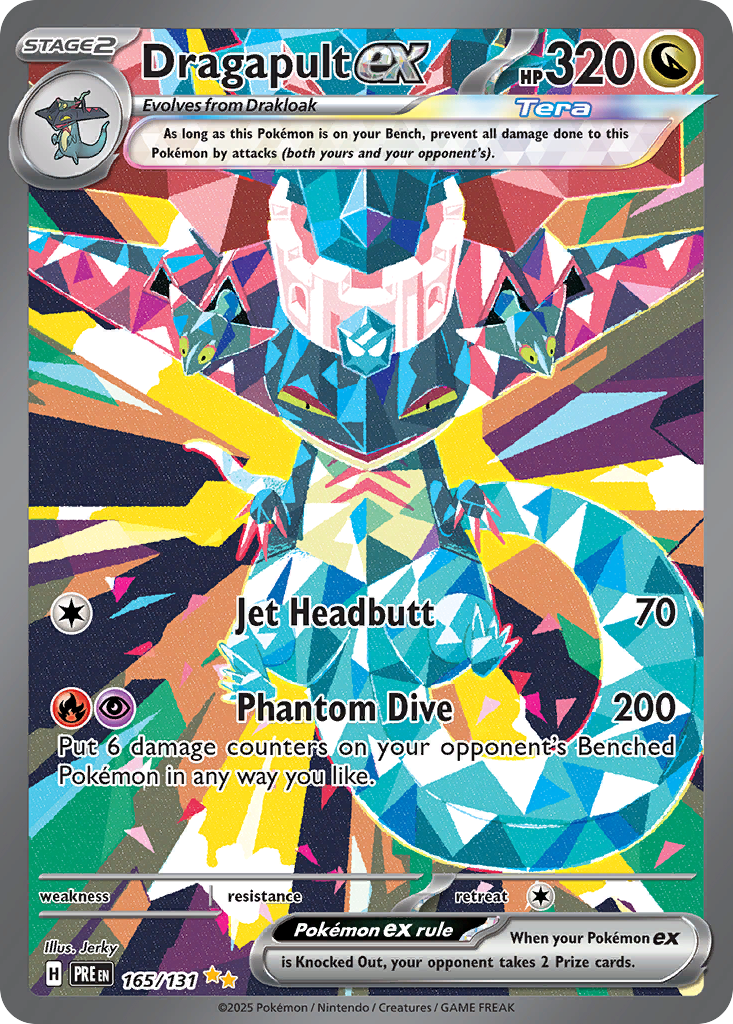
Energy count depends heavily on your attackers’ costs. A deck full of 1-Energy attacks (like early-game Dragapult ex, which only needs a single Colorless Energy for Jet Headbutt) can run as few as 8-9 Energy. A deck built around 3-4 Energy attackers needs closer to 12-14, plus Energy-acceleration Trainers or Abilities to keep up.
How to pick your first archetype
Don’t start by asking “what’s the strongest deck.” Ask these three questions instead:
- Does it have more than one way to start a game? Decks built around a single fragile combo piece (one specific Basic Pokémon, one specific Item) are miserable to learn on because a single missed draw can lose you the game before you’ve made a decision.
- Does it have a clear, repeatable win condition? You want a deck where “what do I do this turn” has an obvious answer most of the time — evolve, attack, refill your hand. Decks that rely on precise turn-by-turn sequencing to function are a second-deck problem, not a first-deck one.
- Is it currently supported, not just historically strong? Check that the deck’s key pieces are still Standard-legal post-rotation. A deck idea from a 2024 YouTube video might be built entirely around cards that rotated out in April 2026.
As of August 2026, Dragapult ex / Dusknoir is the deck I’d point most newer competitive players toward, and not just because it’s currently sitting in the S-tier of the Standard meta (full breakdown in the tier list). It’s specifically beginner-friendly because it has a simple, repeatable game plan: play cheap Basic Dreepy, evolve toward Dragapult ex for consistent damage, and close games with Dusknoir’s Cursed Blast Ability rather than needing a complicated bench setup.
That said, it’s not the only reasonable starting point, and it has real downsides for a first deck: the evolution line means you’re vulnerable to disruption before Dragapult ex is online, and because it’s the most-played deck in the format, you’ll see a lot of tech cards built specifically to answer it. If you’d rather learn on something with fewer moving parts, a single-prize, Basic-heavy deck (no ex/Mega Pokémon, so your opponent never gets a 2-prize knockout on you) is a legitimate, cheaper alternative — you’ll lose some raw power but gain a lot of forgiveness.
Budget path vs. premium path
You do not need $300 of cards to play a competitively legal Standard deck. Here’s what building the same archetype (Dragapult ex / Dusknoir) looks like at two different budgets, as of August 2026 — treat all prices as rough market snapshots, not guarantees, since singles prices move week to week.
| Component | Budget path | Premium path |
|---|---|---|
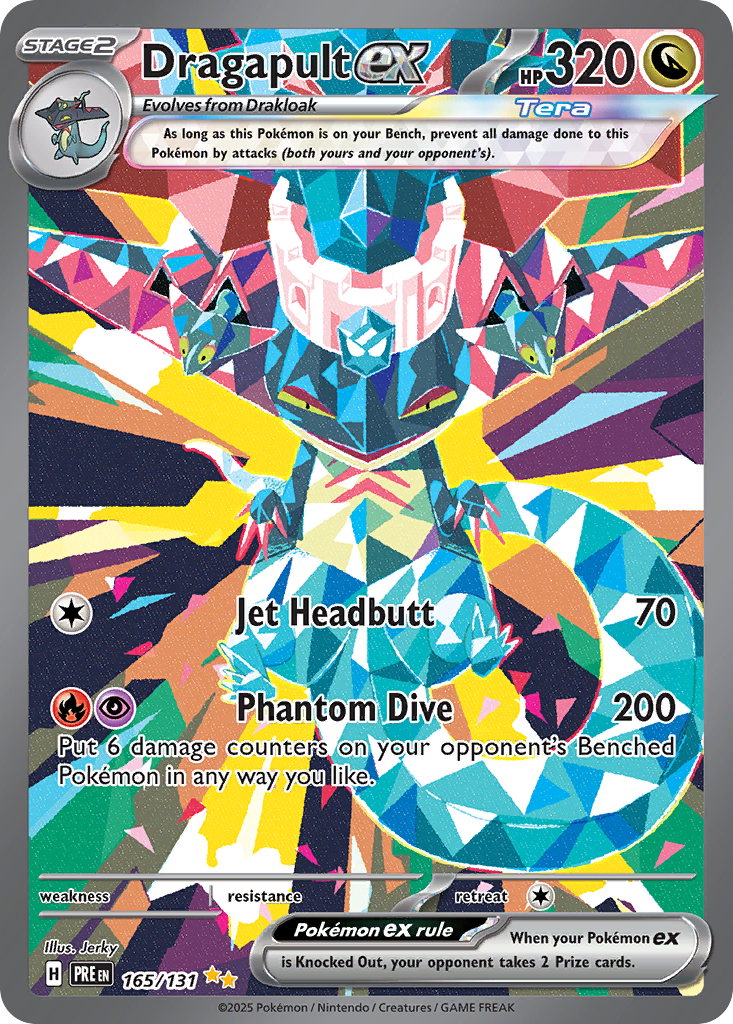
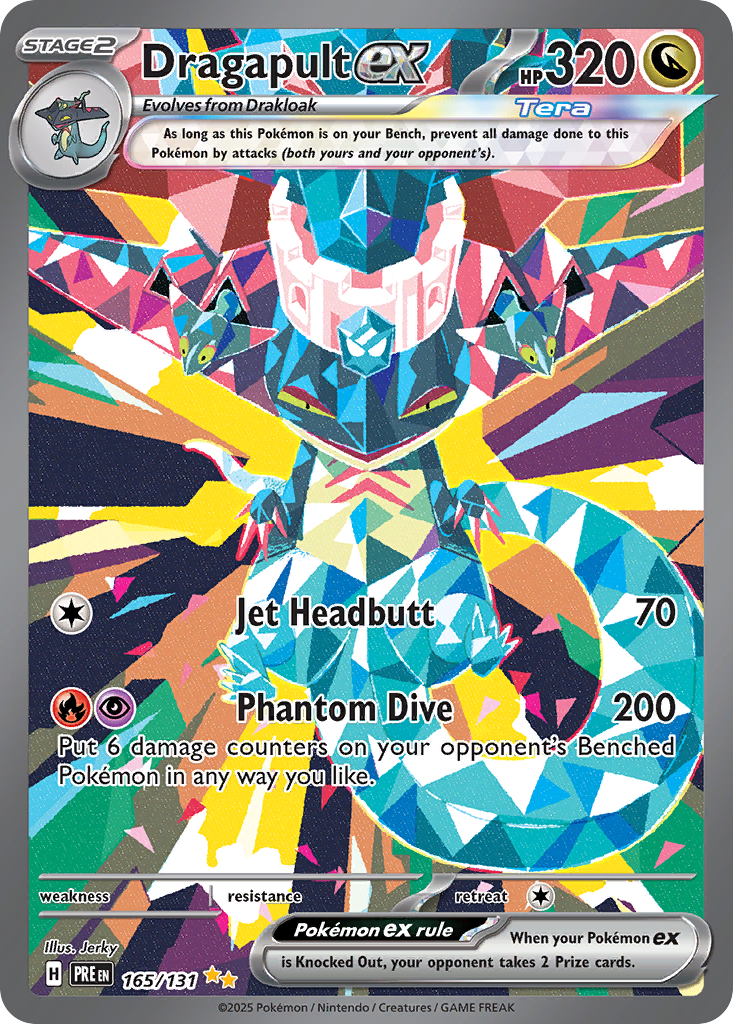
| Core attacker | Regular Dragapult ex (Double Rare, #73) — roughly $8-15 each | Special Illustration Rare Dragapult ex (#165) — roughly $130-150 each as of mid-2026 |
| ACE SPEC slot | Skip it, or run a single budget copy of Prime Catcher (~$15-25) | Full-art or alt-art ACE SPEC if available |
| Support Pokémon (Dreepy/Drakloak/Dusknoir) | Bulk commons/uncommons, often under $1 each | Same functional cards — no real premium version needed here, which is worth knowing |
| Trainers/Supporters | Playset of functional reprints, several dollars total per card | Same — most Trainer staples don’t have a “premium” version that plays any differently |
| Starting point | Dragapult ex League Battle Deck (a real preconstructed 60-card product, MSRP around $40-45, released April 2025) as your base, then upgrade | Singles-built list from scratch, or the League Battle Deck plus Prismatic Evolutions Elite Trainer Box pulls for chase-card upgrades |
| Protection | Ultra Pro Pro-Fit Sleeves and a basic deck box | Same — sleeves are a functional necessity regardless of budget |
The honest takeaway here: the playable version of almost any deck is cheap. Nearly all of the price gap between a budget build and a premium one comes down to a single alternate-art chase card that plays identically to its cheaper counterpart on the table — a Special Illustration Rare Dragapult ex deals the same damage as the plain Double Rare. The expensive version is a collecting choice, not a competitive requirement. That’s genuinely good news for a first deck: buy the functional playset first, and treat the alt-art chase card as a nice-to-have upgrade later, not a prerequisite.
One caveat on the budget path: preconstructed Battle/League Decks are convenient, but they’re built to be “good enough,” not optimized — you’ll usually want to swap a few weaker filler cards (some come with only 1-2 copies of key draw Supporters) once you understand the deck better. Don’t assume a box product is tournament-ready straight out of the packaging.
Common first-deck mistakes
Too many attackers, not enough draw support. New deck lists often run 20+ Pokémon because every attacker felt worth including. A deck that can’t reliably draw into its plan loses to a worse deck that can. Cut down to your core attacking line plus real support, and lean harder on Supporters and search Items than feels natural at first.
Copying an old decklist without checking regulation marks. This is the single most common beginner mistake, and it’s an easy trap because it looks like you’re using current cards. Two real examples:
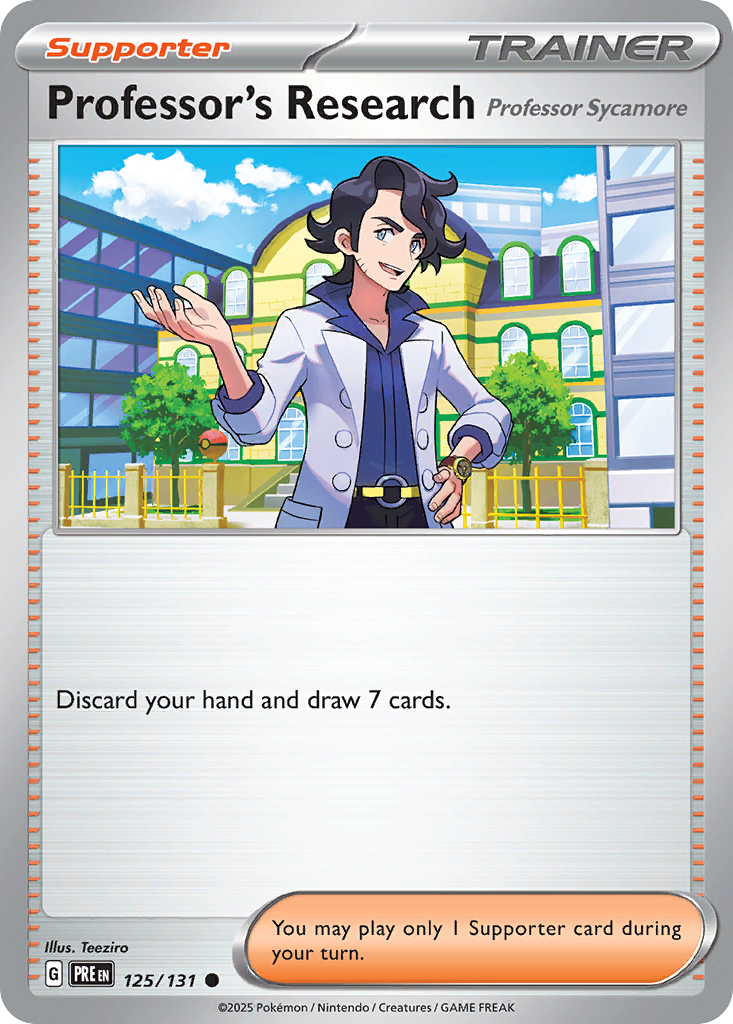
Professor’s Research printed in Prismatic Evolutions (#122-125) carries a G regulation mark — the same mark that rotated out in April 2026 — even though the rest of that set is H-marked and current. Pulling this exact card from a 2025 pack does not make it tournament-legal today; you’d need a copy with an H, I, or J mark instead (there are current-marked reprints in other 2025-26 products).
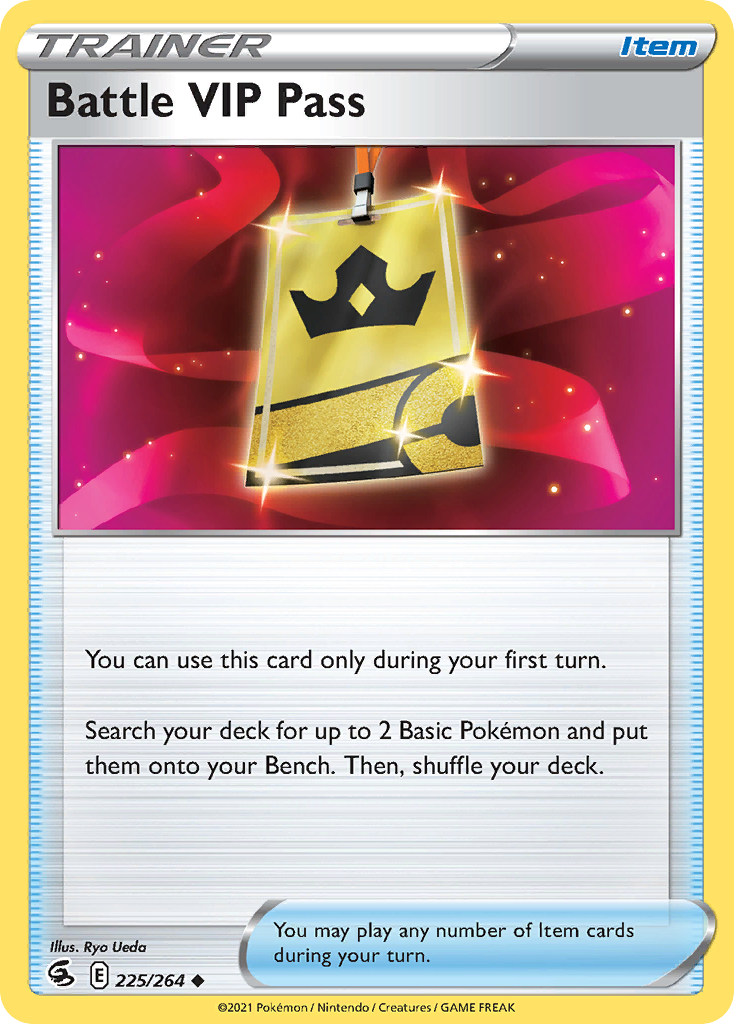
Battle VIP Pass, a card that shows up constantly in older “best Trainer cards” articles and YouTube decklists, carries an E regulation mark from Fusion Strike (2021) and has been out of Standard rotation for years. If you’re building a list from an older guide or a used binder without checking marks card-by-card, you can end up with an illegal deck without realizing it until a judge catches it at your first event.
Running only 1-2 Supporters. Supporters are your best draw and disruption tools, but you can only play one per turn — so running just a couple of copies means you’ll frequently have a dead turn with no Supporter in hand. 6-9 total Supporter cards, mixing draw and Boss’s Orders-style gust effects, is a much safer range.
Ignoring your opening-hand math. If your deck’s win condition depends on a Stage 2 Pokémon, but you’re only running 2-3 copies of its Basic form, you’ll mulligan or stall out constantly. Basic Pokémon with a real Ability or a cheap early attack (not just evolution fodder) should make up a meaningful chunk of your 12-16 Pokémon slots.
Over-teching with 1-ofs. It’s tempting to run a single copy of every cool situational card you own. In practice, 1-ofs are card slots you’ll rarely draw when you actually need them. A tighter core of 3-4 copies of your key pieces performs more consistently than a wide spread of singles.
Sample beginner decklist: Dragapult ex / Dusknoir (budget core)
This is a realistic starting 60, built around the ratio guidance above — swap Trainer counts slightly based on what you already own.
| Count | Card | Type |
|---|---|---|
| 4 | Dreepy | Basic Pokémon |
| 3 | Drakloak | Stage 1 Pokémon |
| 3 | Dragapult ex | Stage 2 Pokémon |
| 2 | Dusknoir | Stage 2 Pokémon (finisher) |
| 2 | Duskull | Basic Pokémon |
| 2 | Dusclops | Stage 1 Pokémon |
| 4 | Iono | Supporter |
| 3 | Arven | Supporter |
| 2 | Boss’s Orders | Supporter |
| 4 | Ultra Ball | Item |
| 4 | Nest Ball | Item |
| 4 | Buddy-Buddy Poffin | Item |
| 4 | Rare Candy | Item |
| 1 | Prime Catcher | ACE SPEC Item |
| 9 | Basic Energy (Psychic/Colorless split) | Energy |
That’s 60 cards total: 16 Pokémon, 25 Trainers/Items/Supporters, 9 Energy — leaning slightly Pokémon-heavy because of the double evolution line (Dreepy chain plus the Duskull chain), which is normal for this specific archetype. A single-prize or less evolution-dependent deck would shift a few of those Pokémon slots into more Trainers instead.
Is it OK to build a deck with zero ex or Mega Pokémon?
Yes, and for a first deck it’s a completely reasonable choice. Single-prize decks (no ex, Mega, or V-style Pokémon) never hand your opponent a 2-prize knockout, which makes the prize-trade math forgiving for a player still learning to count prizes and plan attacks. The tradeoff is raw damage output — most single-prize attackers hit for less than ex Pokémon do, so these decks usually win through card advantage and disruption rather than brute force. It’s a genuinely different skill set to learn, but not a worse one.
FAQ
How many Pokémon should a beginner Standard deck run?
Most solid Standard decks run 12-16 Pokémon. Fewer than that and you risk not having enough attackers or support Pokémon on board; more than that usually means you’re not running enough draw and search Trainers to actually find your win condition consistently.
Can I use cards from the original Scarlet & Violet base set or 151?
No — as of the April 10, 2026 rotation, any card with a G regulation mark is no longer Standard-legal, and that includes the entire original Scarlet & Violet set, Paldea Evolved, Obsidian Flames, 151, Paradox Rift, and Paldean Fates. Those cards are still legal in the separate Expanded format, just not Standard.
Do I need to buy singles, or can I build a deck straight from booster packs?
Booster packs are a very inefficient way to build a specific deck — you’ll get a lot of cards you don’t need and may still be short on the 3-4 copies of a specific staple your list wants. A preconstructed Battle/League Deck plus a handful of singles purchases from a marketplace is almost always cheaper and faster than pack-opening your way to a full 60.
How do I check if a specific card is legal for Standard?
Look at the regulation mark — a single letter printed next to the set symbol in the bottom corner of the card. As of the 2026 season, only H, I, and J marks are Standard-legal. If you’re unsure, the Pokémon TCG’s official card database and most deck-building apps (like Pokémon TCG Live’s builder) will flag illegal cards automatically when you try to add them.
Is it worth starting with a preconstructed Battle Deck instead of building from scratch?
For a first deck, yes. Preconstructed decks like the Dragapult ex League Battle Deck give you a legal, functional 60-card list on day one for a fixed price, and you can upgrade specific weak slots over time instead of researching and buying 60 individual cards up front. Just don’t assume the stock list is fully optimized — most benefit from a few Supporter or Item swaps once you’ve played a handful of games.
Card prices and the competitive meta both move quickly — this guide reflects the Standard format and market as of August 2026, and nothing here is financial advice. If you’re buying singles online to fill out a list, stick to reputable marketplaces or verified sellers; see my guide to buying Pokémon cards online safely if you’re new to that side of the hobby.
The takeaway
Building your first Standard deck comes down to three things: stay inside the legal rules (60 cards, 4-copy limit, 1 ACE SPEC, correct regulation marks), lean on a Pokémon/Trainer/Energy ratio that favors consistency over raw power, and pick an archetype with a forgiving, repeatable game plan rather than whatever’s hyped up online that week. Start with the budget version of a well-supported deck like Dragapult ex / Dusknoir, learn how it actually plays across a few games, and upgrade individual cards — chase alt-arts included — once you know exactly what your list needs.
Related Articles
- Pokémon TCG Beginner’s Guide 2026: What to Buy First
- Pokémon TCG Standard Tier List: July 2026 Meta Guide
- Your First Pokémon TCG League Challenge: What to Know
More Trading Card Game Guides
- How to Build a Competitive One Piece Card Game Deck (One Piece Card Game)
- How to Build a Competitive Fusion World Deck (2026) (Dragon Ball Super Card Game)
Comments