※本ページはプロモーションが含まれます
If you’ve got a shoebox, a binder, or a whole bulk box of Pokémon cards you’re finally ready to sell, the short answer is: sell your true chase cards individually on eBay or TCGplayer (where serious buyers are actually searching), sell mid-value playables and near-mint holos as sorted lots to speed things up, and dump unsorted bulk to a local game store or a bulk buyer rather than wasting hours listing $0.05 commons one at a time. Which platform wins depends entirely on what you’re holding — a single $400 alt-art and a shoebox of 3,000 commons should almost never go through the same sales channel. Here’s how to sort your collection, price it realistically, and actually move it without getting scammed or leaving money on the table.
Card prices below reflect approximate market data as of August 2026 and move constantly — this is general information, not financial advice. Always check current sold listings before pricing anything valuable.
Step 1: Sort before you sell anything
Before picking a platform, split your collection into three rough tiers. This single step determines almost everything else about how you sell.
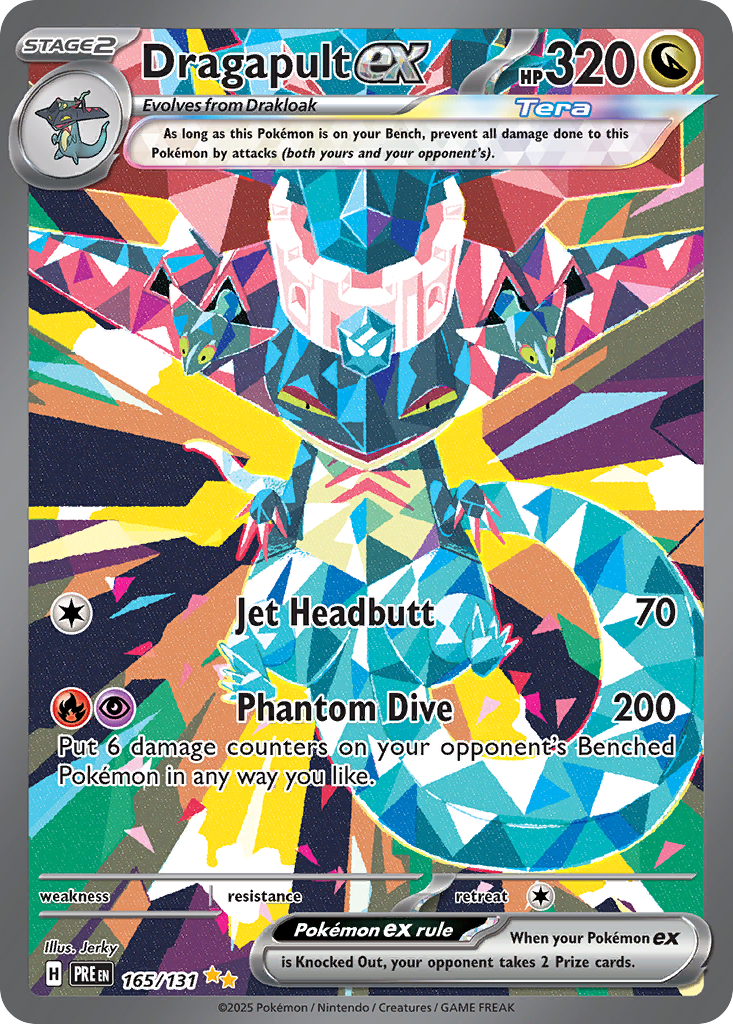
- Chase cards — anything realistically worth $20+ raw: Special Illustration Rares, alt-art Secret Rares, ex/VMAX/VSTAR hits, vintage holos, first editions. These deserve individual listings with real photos.
- Mid-value cards — roughly $1–$20: playable Standard-format staples (Trainers, ACE SPECs, non-chase Pokémon ex), non-chase holos, and near-mint vintage commons/uncommons. These sell best as themed lots (by set, by type, or “all holos”).
- True bulk — everything else: commons, uncommons, damaged cards, and duplicates worth under a dollar. Don’t spend individual listing time on these; they belong in bulk sales or LGS trade-ins.
Misjudging this step is the single biggest reason people either burn a weekend photographing $0.10 cards or, worse, dump a real chase card into a bulk lot by accident. Sort holos and anything with a special rarity symbol (star, illustration rare border, gold/rainbow border) out of the pile before you do anything else.
Platform comparison: where each type of card actually sells
TCGplayer
TCGplayer is the closest thing the hobby has to a dedicated singles marketplace, and it’s where competitive players and set-completers actually search for specific cards. As of February 2026, standard Marketplace sellers pay a 10.75% commission plus a 2.5% + $0.30 transaction fee on the order total; Pro sellers pay 9.25% commission + 2.5% (11.75% combined); and TCGplayer Direct sellers get a lower 8.95% commission but pay a flat per-item Direct Fee (around $1.12 for cards over $2.49) since TCGplayer replaced its old shipping-replacement-cost model in June 2026. Payments for completed orders are batched twice a week (Monday and Thursday) and typically land in your bank account within about four business days via direct deposit.
Good for: competitive singles, sealed product, cards where buyers are searching by exact name and set.
Downside: low-value cards ($0.25 and under) barely clear TCGplayer’s fees once you factor in packaging and the per-item Direct fee — this platform is not where you offload bulk.
eBay
eBay is still the best place for your genuine chase cards, especially graded slabs and anything with real bidding/scarcity appeal, because it has the largest buyer pool of any platform in the hobby and its Authenticity Guarantee program (which now covers eligible single cards selling for $200+, lowered from the previous $250 threshold) gives nervous buyers confidence to bid higher on expensive cards. Final value fees on trading cards run 13.25% on the sale total up to $7,500 (2.35% above that), and payments through eBay’s Managed Payments system typically hit your bank account within 1–3 business days after the item is marked as shipped/delivered.
Good for: high-value singles, graded slabs, vintage cards, anything worth an auction-style bidding war.
Downside: fees and payment holds can eat into low-value sales, and eBay’s buyer protection policies mean disputed “not as described” claims often favor the buyer — so accurate photos and honest condition descriptions matter more here than anywhere else.
Local game store (LGS)
Walking cards into your local game store is the fastest way to get cash (or store credit) with zero shipping, zero listing photos, and zero waiting on a buyer. Most shops pay 40–60% of TCGplayer market/low price in cash, and typically 65–80% in store credit — Knight & Day Games, for example, publicly lists 70% cash / 80% credit on sealed product, and Game Goblins offers up to 65% cash with a 25% credit bonus on top. That’s a real haircut versus selling direct to a buyer, but you’re paying for speed, zero risk, and zero effort.
Good for: bulk and mid-value lots you want gone today, or cards you’ll use as credit toward new packs anyway.
Downside: you’ll almost never get full market value, and buylist rates vary wildly store to store — it’s worth checking two or three shops’ posted buy rates before you walk in with anything valuable.
Facebook Marketplace and Pokémon-specific Facebook/Discord groups
Selling directly to other collectors in dedicated Facebook groups or Discord servers can net you close to full market price since there’s no platform commission at all — but it’s also the highest-scam-risk channel on this list. Local police departments in multiple cities have reported a rise in Marketplace robberies specifically targeting Pokémon card meetups, and a separate, increasingly common scam involves “buyers” who push the conversation off-platform to apps like Telegram or WhatsApp before ghosting after payment. If you sell this way: meet in a public, well-lit place (many police stations now offer “safe exchange zones” specifically for this), never accept a shipped payment before the buyer confirms receipt, and treat any request to move off-platform as a red flag.
Good for: local, low-friction sales of mid-value and bulk lots where shipping isn’t worth the hassle.
Downside: real personal-safety and scam risk; no fee-funded buyer/seller protection like TCGplayer or eBay.
Card shows
If there’s a card show near you, bringing a sorted binder is one of the fastest ways to sell mid-value cards for cash on the spot, and you skip shipping entirely. Table fees vary by event size (from free community meetups to $100+ for larger conventions), and dealers there are informed buyers who know market prices — overpricing is the single most common mistake sellers make at shows. Bring a card reader (Square or similar) since a growing share of buyers don’t carry cash, and organize inventory by set/type in labeled binders; nobody wants to dig through an unsorted shoebox.
Good for: offloading a sorted mid-value collection quickly, face-to-face negotiation on chase cards, instant cash.
Downside: you’re trading some margin for speed, same as an LGS, and you need to be physically present.
Platform comparison table
| Platform | Best for | Approx. fees | Payout speed |
|---|---|---|---|
| TCGplayer (Marketplace) | Singles, competitive cards | ~10.75% + 2.5% + $0.30 | Batched 2x/week, ~4 business days |
| TCGplayer Direct | Faster-moving inventory, less fee math | 8.95% + ~$1.12/item flat fee | Same batch schedule |
| eBay | Chase cards, graded slabs, vintage | ~13.25% up to $7,500 | 1–3 business days after delivery |
| Local game store | Bulk, instant cash/credit | Effectively 20–60% below market | Instant |
| Facebook groups/Discord | Local mid-value/bulk, no fees | $0 platform fee (real risk cost) | Instant (cash/local payment app) |
| Card shows | Sorted mid-value collections | Table fee only, no per-sale % | Instant cash |
How to price a bulk collection vs. an individual chase card
These require completely different approaches, and mixing them up is where sellers lose money.
Bulk (unsorted commons/uncommons): Don’t price per card — price per thousand. As of 2026, true mixed bulk typically runs $15–$25 per 1,000 cards from a dealer, and unsorted “mystery” bulk can go as low as $3–$8 per 1,000 if it’s not sorted at all. Sorting into themed lots (all holos, complete Trainer sets, one set per lot) can multiply what the same cards are worth several times over — the same 5,000-card box can be worth $40 unsorted or $300+ sorted into labeled lots, purely based on the buyer’s time saved.
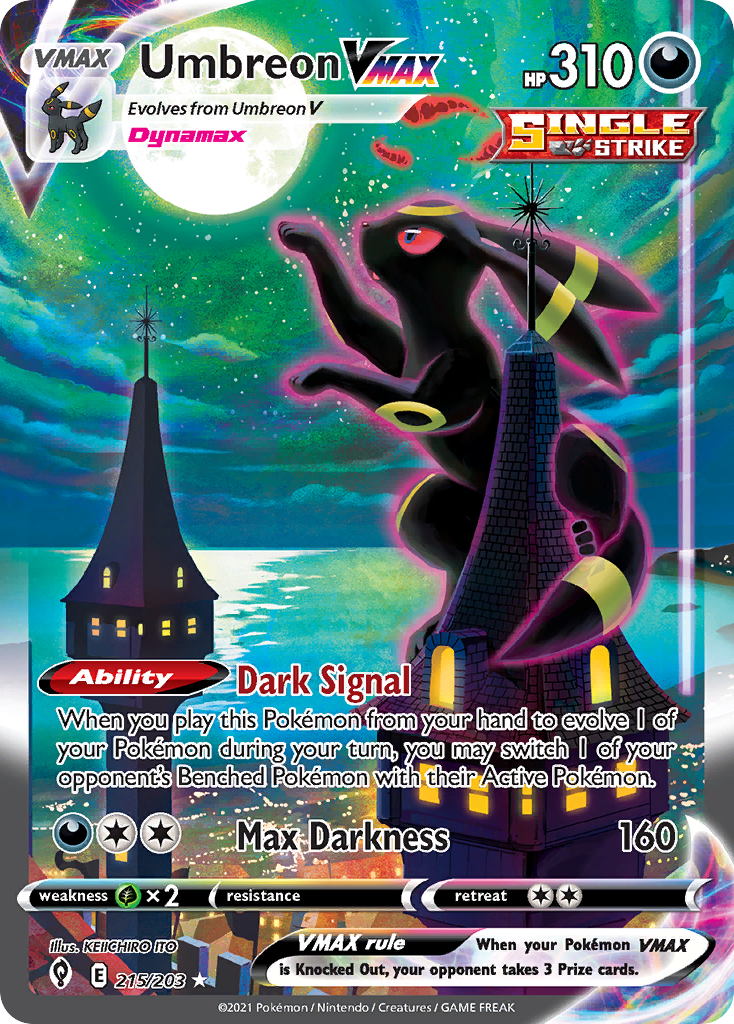
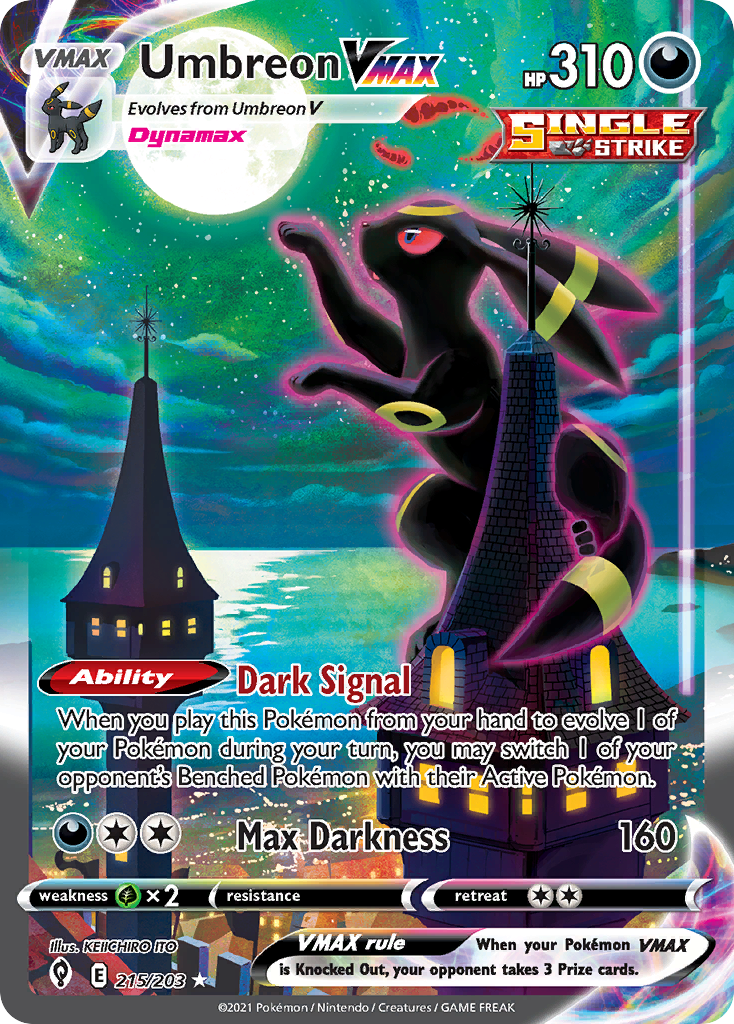
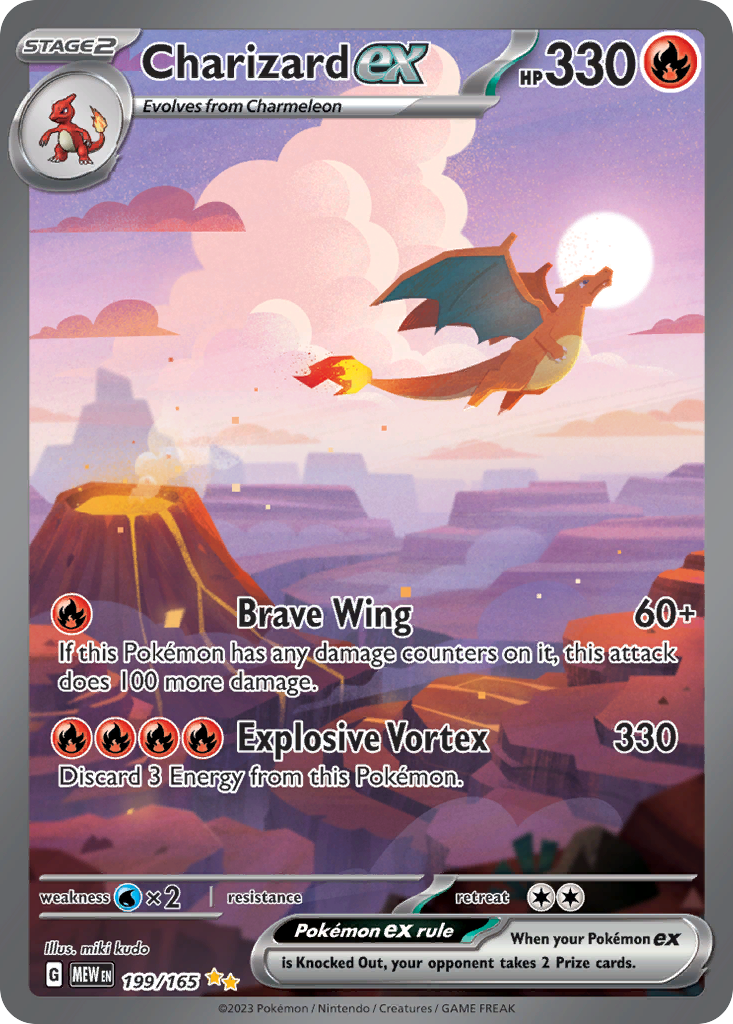
Individual chase cards: Never price off a single “buy it now” listing you saw once — price off recent sold listings (eBay’s sold/completed filter, or TCGplayer’s market price, which is a rolling average of actual sales, not asking prices). For example, Charizard ex — Special Illustration Rare from Scarlet & Violet: 151 (#199/165) has traded in roughly the $350–$400 range on TCGplayer as of August 2026, down from over $1,000 during 2025’s 151 hype, which is a good reminder that even genuinely popular cards can drop 60-70% off their peak. Meanwhile Umbreon VMAX (“Moonbreon,” Alternate Art Secret Rare, #215/203, Evolving Skies) has held up much better, with raw near-mint copies still commonly selling in the $400–$700 range and graded PSA 10s well above that — a reminder that hype cards from years-old sets with lower print runs and no reprints tend to age better than same-year hype.
For anything you think might be worth grading before you sell, run the math first — our PSA vs. CGC vs. BGS: Pokémon Card Grading Guide walks through when a raw-to-graded price gap is actually worth the grading fee and turnaround time, versus when it’s just a bet.
Photography and listing tips that actually move cards
Buyers can’t hold your card, so your photos are doing all the trust-building work. A few things that consistently separate listings that sell fast from ones that sit:
- Use natural, diffused light — a window with indirect daylight beats any ring light for showing true holo pattern and color without blowing out highlights. Avoid direct sun or a single hard light source; both cast shadows that hide condition issues (or make buyers suspect you’re hiding something).
- Photograph valuable cards out of the sleeve when possible. A penny sleeve or top loader protects the card, but the plastic glare makes even a perfect card look worse in photos and can hide corner/edge condition — for anything over $20, take at least one shot with the card unsleeved on a neutral gray or white background, plus a sleeved shot for scale/protection context.
- Always show the back of the card. Serious buyers check for centering and edge wear on both sides — skipping the back photo is one of the fastest ways to make a listing look like it’s hiding damage.
- Add close-up shots of anything that matters: corners, edges, and centering on high-value cards; the actual condition issue (not just a wide shot) on anything played or damaged. Honest photos of flaws build more trust than trying to angle around them, and they head off “not as described” disputes before they happen.
- Ship in rigid packaging. A card in a penny sleeve, a semi-rigid sleeve like Ultra Pro Card Saver 1, and a bubble mailer with cardboard stiffener is the accepted minimum for anything worth more than a few dollars — a bent card from flimsy packaging is a guaranteed refund request. A cheap digital pocket scale also pays for itself fast once you’re shipping regularly, since USPS/eBay label pricing is weight-tiered and guessing wrong either overcharges you or gets a package bounced back.
FAQ
What’s the single best place to sell a large Pokémon card collection?
There isn’t one — split it. Sell true chase cards individually on eBay or TCGplayer, sell sorted mid-value lots at a card show, in local Facebook groups, or via TCGplayer, and move unsorted bulk through a local game store’s buylist or a dedicated bulk buyer. Trying to sell a whole mixed collection through a single channel almost always leaves money on the table somewhere.
Is it better to sell on eBay or TCGplayer?
Fee-wise they land within a percentage point or two of each other once you account for TCGplayer’s transaction fee and eBay’s final value fee. eBay tends to win on high-value single cards and graded slabs thanks to its larger buyer pool and Authenticity Guarantee program; TCGplayer wins on competitive/playable singles where buyers are searching by exact card name and set.
How much is my bulk Pokémon collection actually worth?
Unsorted mixed bulk is typically worth $3–$25 per 1,000 cards depending on condition and how well it’s sorted, as of 2026 — sorted, themed lots (all holos, one full set, complete Trainer runs) sell for meaningfully more per card than an unsorted shoebox. Don’t expect life-changing money from bulk; it’s really about clearing space and getting something rather than nothing.
Is it safe to sell Pokémon cards on Facebook Marketplace?
It can be, but it carries more risk than a platform with built-in buyer/seller protection. Meet in a public, well-lit location (some local police stations now offer designated “safe exchange” spots), never move the conversation to a different messaging app at a buyer’s request, and treat pressure to skip normal verification steps as an immediate red flag.
Should I get a card graded before I sell it?
Only if the raw-to-graded price gap for that specific card, in current condition, clearly clears the grading fee, submission risk, and turnaround time — grading isn’t a guaranteed upgrade in value, since a card that comes back a 9 instead of a 10 can sell for barely more than raw. See our PSA vs. CGC vs. BGS: Pokémon Card Grading Guide for the full breakdown of when it’s worth it.
The takeaway
Selling a Pokémon collection well is mostly a sorting problem, not a platform problem: figure out what’s actually a chase card, what’s a sellable mid-value lot, and what’s true bulk, and route each tier to the channel that fits it — eBay or TCGplayer for the real hits, a card show or local group for sorted mid-value lots, and your LGS’s buylist for everything else. Skip that step and you’ll either waste hours photographing commons or accidentally bulk-sell something worth real money.
More Trading Card Game Guides
- How to Sell a One Piece Card Game Collection Safely (2026) (One Piece Card Game)
- How to Sell Your Dragon Ball TCG Collection Safely (Dragon Ball Super Card Game)
- Where Naruto’s Two TCGs Rank in the 2026 Anime Card Market (Naruto Card Game)
Comments