※本ページはプロモーションが含まれます
Disclosure: This post contains affiliate links. If you buy through them, we may earn a commission at no additional cost to you. Learn more.
Your first Pokémon TCG League Challenge is genuinely less scary than it looks: it’s a Standard-format Swiss tournament (no elimination, so you play every round no matter what), you need a legal 60-card deck plus a filled-out deck list, and your card sleeves just need to be uniform, opaque, and not visibly worn. Entry usually runs $5–$15, everyone walks away with at least one booster pack, and the vibe at a local game store is far more “friendly regulars” than “cutthroat esports arena.” Here’s exactly what to bring, how the rounds work, and how to not embarrass yourself at deck check.
- League Challenge vs. League Cup: What Are You Actually Signing Up For?
- What to Bring: The Actual Checklist
- How Swiss Format Actually Works
- Deck List Requirements: Don’t Wing This Part
- Sleeve and Deck Checks: What Judges Are Actually Looking For
- Etiquette Tips for a Nervous First-Timer
- League Challenge vs. League Cup at a Glance
- Frequently Asked Questions
- Takeaway
- Related Articles
- More Trading Card Game Guides
League Challenge vs. League Cup: What Are You Actually Signing Up For?
Both are official Play! Pokémon events run at local League-eligible stores, both use the Standard format, and both award Championship Points (CP) toward Worlds qualification — but they’re not the same size of commitment.
League Challenges are the true entry point: Swiss rounds only, no top-cut elimination, so if you go 1-2 you still finish the day having played three full games. As of the 2026 season, first place typically earns around 15 CP, with smaller amounts for lower finishes, scaled to how many players showed up.
League Cups are the next step up — same Swiss format, but the top-performing players then move into a single-elimination top cut, and first place is worth roughly 50 CP. Cups also award exclusive playmats to age-division winners, on top of the CP. They run less often (Play! Pokémon guidance has stores hosting them roughly quarterly, versus monthly for Challenges), and the field tends to be a little more serious because more points are on the line.
If this is genuinely your first in-person event, start with a League Challenge. It’s lower stakes, shorter (usually 3–4 rounds, wrapped up in an afternoon), and the Championship Points you earn still count toward the same season total.
What to Bring: The Actual Checklist
Nothing on this list is exotic, but forgetting even one item can mean scrambling before round 1 or borrowing from a stranger:
- A complete, legal 60-card deck. Check every card’s regulation mark (the small letter printed at the bottom of the card, next to the set symbol) — as of the April 2026 rotation, only cards marked H, I, or J are Standard-legal. Cards marked G or earlier (this includes most of the original Scarlet & Violet base set, 151, and Paldea Evolved) are rotated out and will fail your deck check even if they’re powerful cards.
- Matching, tournament-legal sleeves. All 60 must be the same color, design, size, and condition, with fully opaque edges — no see-through borders where a card face could peek through. Bring a spare pack; a single bent or scuffed sleeve in an otherwise clean deck can get flagged as a “marked card.” Ultra Pro tournament-legal card sleeves
- A deck box to keep your deck (and prize cards, once the game starts) organized between rounds. Pokémon TCG deck box
- A completed deck list, or the tools to fill one out on-site (see below).
- Damage counters and a coin or die for coin flips and damage tracking — some organizers supply these at the table, but don’t count on it. Damage counter and dice set
- A playmat (optional but genuinely useful — it defines your play area and protects cards from a sticky table). Pokémon TCG playmat
- Your Player ID. Create a free Pokémon Trainer Club account and generate a Player ID before you go; it’s how the store reports your Championship Points. If you forget, the organizer can issue you one on-site, but you’ll want to link it to your account afterward.
- Cash for entry — most stores charge somewhere in the $5–$15 range, and not every location takes card payment for walk-ins.
- Snacks and water. League Challenges can run 3+ hours once you count deck checks, byes, and the inevitable slow round; local stores rarely have much food on hand.
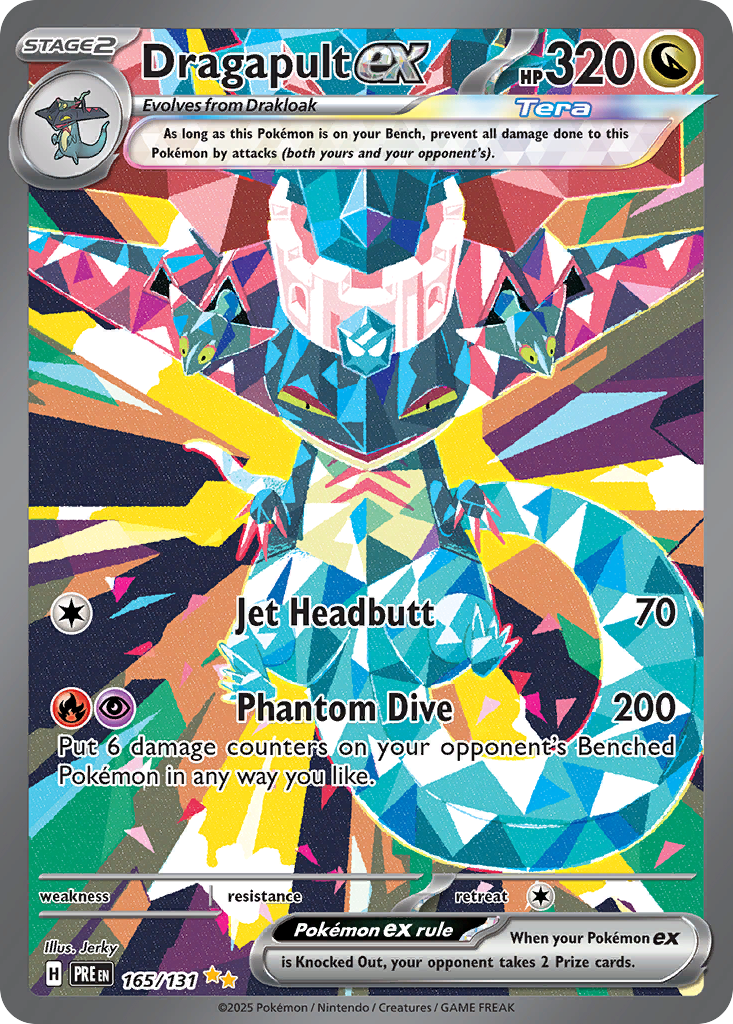
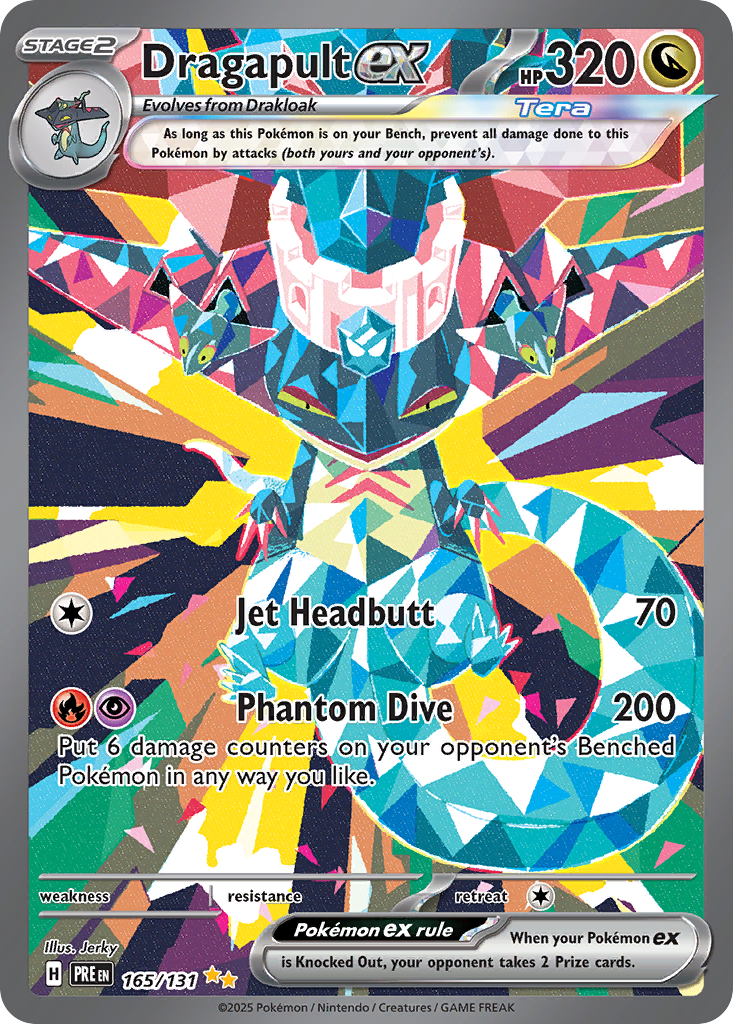
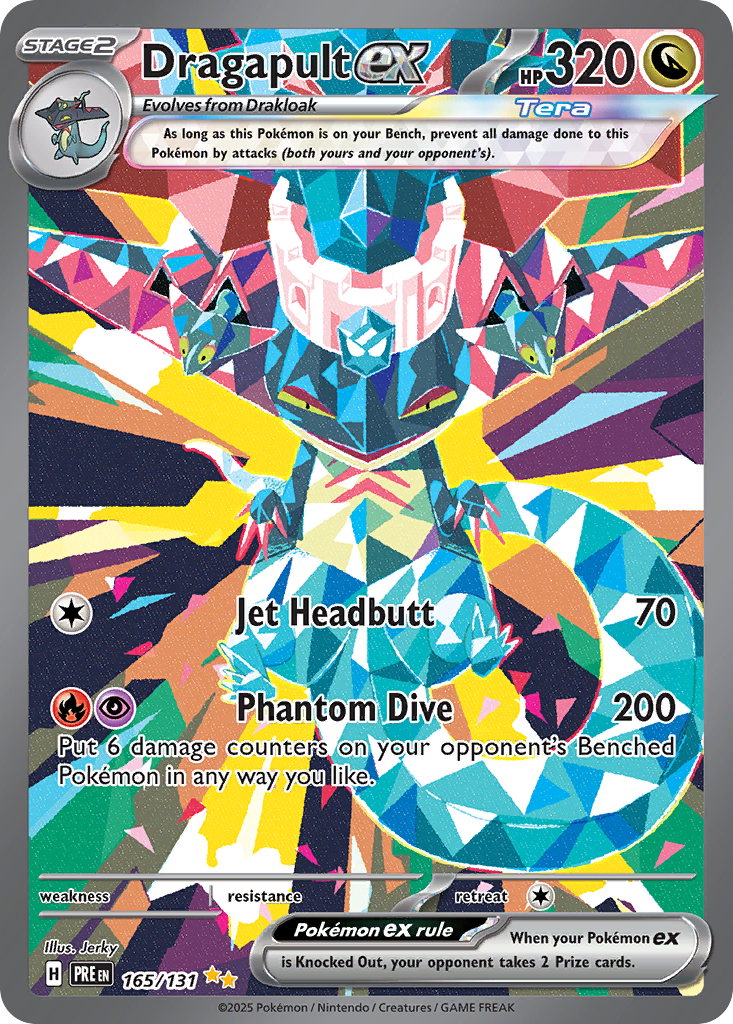
If you don’t own a legal, tournament-ready deck yet, buying a pre-built Battle Deck or Elite Trainer Box built around a current Standard staple (like the current top-tier Dragapult ex line) is the fastest way to walk in with something competitive rather than trying to homebrew something from a mixed collection the night before.
How Swiss Format Actually Works
Swiss is the format almost every Pokémon TCG event uses below the level of top-cut finals, and it’s simpler than it sounds:
- Round 1 is randomly paired. Nobody has a record yet, so pairings are essentially random (or seeded slightly by past performance if the software has your history).
- From Round 2 onward, you’re paired against someone with the same record. Win your first match and you’ll likely face another 1-0 player next round; lose, and you’ll face someone else at 0-1. This means a single early loss doesn’t eliminate you — it just changes who you’re playing.
- Nobody gets knocked out during Swiss. At a League Challenge, Swiss is the whole event — there’s no cut to elimination rounds, so everyone plays every scheduled round.
- The number of rounds scales with attendance. The standard formula is roughly the ceiling of log₂(players): about 3 rounds for 8 players, 4 rounds for 16, 5 for 32, and so on. Most local League Challenges land at 3–5 rounds since typical turnout is somewhere between 8 and 30 players.
- Final standings are decided by record, then tiebreakers — most commonly opponents’ win percentage (a stat called “resistance”), which is why it can matter who you happen to be paired against, not just whether you win.
League Challenges are typically best-of-one, single 30-minute games. League Cups and bigger events often run best-of-three within a 50-minute round, where you need to win two out of three games. If the clock runs out mid-match, the judge will have you finish the current turn and then play a fixed number of additional turns before adjudicating a result — ask your judge to walk you through it the first time it happens; nobody will think less of you for asking.
Deck List Requirements: Don’t Wing This Part
Here’s a detail a lot of first-timers miss: League Challenges and League Cups are official Championship Series events, which means a written deck list is technically required, not just something for Regionals and Worlds. Your list needs:
- The name, set abbreviation, and collector number of every card (for example, “Ultra Ball — Ascended Heroes — 213/191”), so the judge can verify it’s a legal, current printing.
- The exact quantity of each card, adding up to 60.
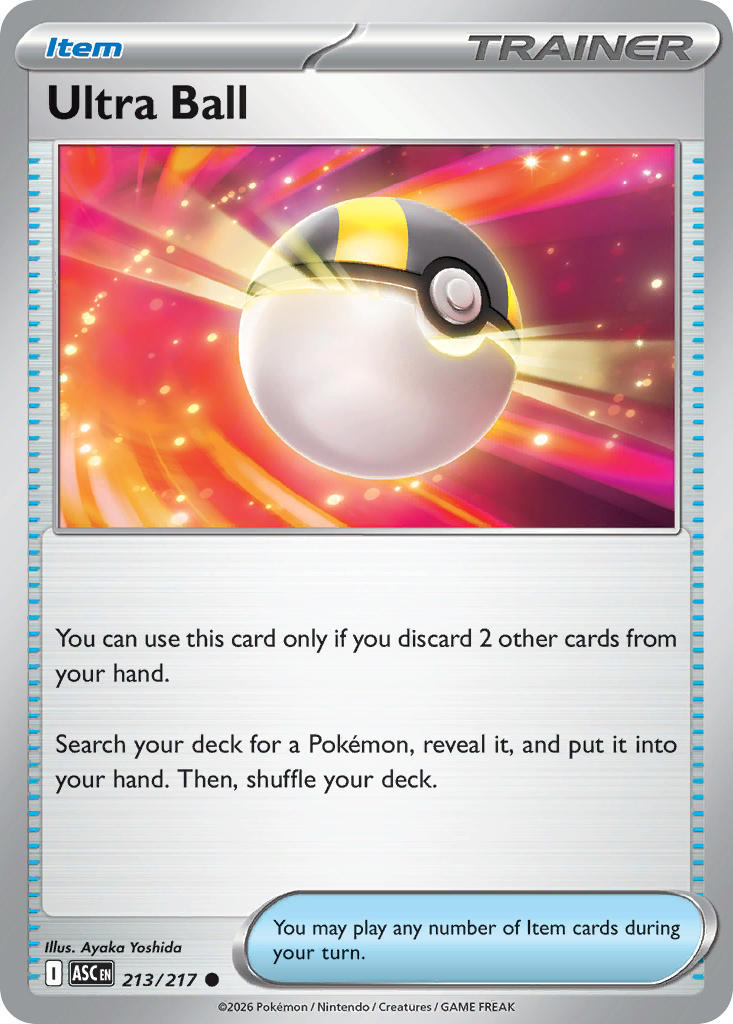
You can hand-write this on the official Play! Pokémon deck list template, or generate one digitally beforehand using a tool like the RK9 Deck List Creator (which can import directly from a Pokémon TCG Live decklist) — either works, but showing up with nothing means filling one out by hand at a folding table while everyone else is already shuffling up for Round 1. Once you submit your list, you generally can’t swap cards for the rest of the day, so double-check quantities and legal printings before you hand it in. In practice, some smaller stores are relaxed about enforcing this for a casual monthly Challenge — but the organizer is within their rights to require it, and it’s genuinely worth having ready regardless.
Sleeve and Deck Checks: What Judges Are Actually Looking For
Deck checks exist to catch two things: illegal cards (wrong regulation mark, too many copies of a card, a deck that isn’t exactly 60 cards) and “marked” decks — cards or sleeves with any physical feature that could let a player identify a card from its back.
Play! Pokémon’s rules require organizers to legality-check at least 10% of decks at any given event, and checks can happen at any point — during registration, mid-round, or right before the final round. What actually gets your sleeves flagged:
- Sleeves that don’t all match in color, brand, size, or wear level.
- A card sleeved noticeably differently than the rest (a common one: Special/Full Art or thicker holo cards double-sleeved while the rest of the deck isn’t, making that one card identifiable by touch or silhouette).
- Visible scuffs, bent corners, or discoloration concentrated on specific cards, which can (even unintentionally) create a “marked card” situation.
- Sleeves with printed artwork or patterns that extend to the very edge — tournament rules require a solid, unbroken border color around the whole sleeve.
The good news: if a problem is caught during pre-round deck checks (before the tournament starts), it’s usually just corrected on the spot with no penalty. Problems found once rounds are underway can result in a warning, a prize/game loss, or worse for repeat or deliberate issues — which is exactly why it’s worth spending $10 on a fresh, uniform pack of sleeves rather than mixing spares from three different sets.
Etiquette Tips for a Nervous First-Timer
- Shake hands (or fist-bump) before and after each match. It’s a small tradition, but skipping it reads as unfriendly even if you didn’t mean it that way.
- Announce what you’re doing out loud — “I’m attaching this Energy,” “Retreating to my bench Pokémon,” etc. It sounds unnecessary until a disagreement happens two turns later about what was actually played.
- Ask before touching your opponent’s cards or side of the table. Want to check their discard pile or count their remaining prize cards? Ask first — it’s standard practice, not rudeness.
- Call a judge for anything you’re unsure about. This is the single biggest piece of advice from experienced players: judges are there to help you get the ruling right, not to punish you for asking. A misplay you catch and ask about immediately is treated very differently than one discovered later.
- Don’t stall. Taking forever on obvious decisions (especially in a 30-minute best-of-one) can itself become a penalty (“slow play”). It’s fine to think through a real decision; it’s not fine to shuffle your deck for two minutes to run out the clock while you’re behind.
- Losing is normal and expected. Even strong local players regularly go 2-2 or 1-3 at a League Challenge — Swiss means everyone plays a full slate of games regardless of record, so there’s no reason to tank your motivation after one loss.
League Challenge vs. League Cup at a Glance
| League Challenge | League Cup | |
|---|---|---|
| Format | Swiss only, no top cut | Swiss + single-elimination top cut |
| Typical match structure | Best-of-one, 30-min rounds | Often best-of-three, 50-min rounds |
| Typical rounds | 3–4 (attendance-dependent) | 4–6 + top cut |
| Frequency | Roughly monthly | Roughly quarterly |
| 1st place CP (approx., 2026 season) | ~15 CP | ~50 CP |
| Notable prize | Booster packs, Play! Points | Booster packs, playmat for age-division winner |
| Entry fee (typical) | $5–$15 | $5–$20 |
| Good for first-timers? | Yes — start here | After you’re comfortable with pairings/deck checks |
Championship Point totals are set by Play! Pokémon and can be adjusted between seasons, so treat the numbers above as a general 2026-season reference rather than a guarantee — always check your event listing for the exact CP on offer.
Frequently Asked Questions
Do I need to be a good player to enter a League Challenge?
No. League Challenges are explicitly the entry-level tier of Play! Pokémon’s Championship Series, and organizers aren’t allowed to restrict entry by skill or age division. Plenty of first-timers, casual players, and kids on their first Standard deck show up alongside more experienced regulars — Swiss format just means you play every round regardless of how earlier ones go.
What happens if a card in my deck turns out to be illegal at deck check?
If it’s caught before the round starts, you’ll typically just be asked to swap it for a legal card or basic Energy and continue — no penalty. If it’s discovered mid-tournament after you’ve already submitted your deck list, it can result in a warning or a game/prize-related penalty, so it’s worth double-checking every card’s regulation mark (H, I, or J as of the 2026 rotation) the night before.
Can I just play on Pokémon TCG Live instead of bringing physical cards?
Not for an in-person League Challenge or Cup — those require your physical, sleeved 60-card deck at the table. Pokémon TCG Live has its own separate online Championship Series events with different rules, so it’s a different track entirely, not a substitute for showing up with paper cards.
Are League Challenges good for younger or Junior/Senior division players?
Yes — age divisions (Junior, Senior, Masters) are built into Play! Pokémon events, and League Challenges specifically can’t restrict entry by division. It’s genuinely one of the more common ways younger players get their first taste of Swiss-format competitive play in a low-pressure setting.
How do I find a League Challenge near me?
Use the official Play! Pokémon event locator on pokemon.com and filter by “League Challenge” or “League Cup” — most stores also post upcoming dates on their own site or Discord. Since events must be listed at least two weeks out to qualify, you’ll usually have plenty of notice to build or fix your deck.
Takeaway
A League Challenge is designed to be the easiest on-ramp into competitive Pokémon TCG: Swiss format means you play every round no matter your record, the entry fee is low, and the community expectation is patience with newcomers, not intimidation. Show up with a Standard-legal deck (double-check those regulation marks), matching sleeves, a filled-out deck list, and a willingness to ask your judge questions, and the actual event will almost certainly go smoother than the anxiety beforehand suggested. For more on building that first competitive-legal deck, see Pokémon TCG Beginner’s Guide 2026: What to Buy First and Pokémon TCG Standard Tier List: July 2026 Meta Guide for what’s actually winning rounds right now.
Championship Points, entry fees, and format details are set by Play! Pokémon and individual store organizers and can change between seasons — always confirm specifics with your local event listing before you go.
Related Articles
- Pokémon TCG Pocket vs. Physical TCG: What to Know
- Pokémon TCG Beginner’s Guide 2026: What to Buy First
- How to Build Your First Standard Pokémon TCG Deck
More Trading Card Game Guides
- Naruto Card Game Preorder Guide 2026: What to Know Now (Naruto Card Game)
- OP-16 The Time of Battle: Set Review and Best Pulls (One Piece Card Game)
- Dragon Ball Fusion World vs Pokémon vs One Piece TCG: The Real Comparison (Dragon Ball Super Card Game)

Comments