※本ページはプロモーションが含まれます
Pokémon Card Value Myths, Debunked (2026 Collector Guide)
If you’ve ever dug through a shoebox of old Pokémon cards hoping for a payday, you’ve probably run into some version of these myths: “it’s holo, so it’s worth something,” “it’s an error, so it’s rare,” “it’s old, so it must be valuable.” None of those are reliably true. Real Pokémon card value comes down to a specific combination of scarcity, condition, and demand for that exact card — and the gap between what collectors assume is valuable and what actually sells can be enormous. Below are six of the most persistent myths, each checked against real market data and specific cards you can look up yourself.
A quick note before we get into it: card prices move constantly and this article isn’t financial advice — treat every number below as a snapshot as of early August 2026, not a guarantee of what a card will fetch next month.
- Quick answer: myth vs. reality
- Myth 1: All Holo Cards Are Valuable
- Myth 2: Errors and Misprints Are Always Worth More
- Myth 3: Old Automatically Means Valuable
- Myth 4: 1st Edition Always Crushes Unlimited
- Myth 5: A PSA 10 Is Always Worth Dramatically More Than a PSA 9 (or Raw)
- Myth 6: Gold or Rainbow “Secret Rares” Are Guaranteed Good Investments
- Price snapshot: myth cards compared (as of August 2026)
- Q&A: Common Reader Questions
- Does a card need to be holo to be worth money?
- How can I tell if a card is a real error or just a normal print variation?
- Is it worth getting a bulk common graded just because it’s old?
- Why did my “valuable” card drop in price after a new set came out?
- What’s the safest way to confirm a card’s real market value before buying or selling?
- Takeaway
- Related Articles
- More Trading Card Game Guides
Quick answer: myth vs. reality
| Myth | Reality (short version) |
|---|---|
| “All holos are valuable” | Most modern holos sell for $1–$5; only a handful of chase cards per set matter |
| “Errors are always worth more” | Most errors get a modest premium at best; a few famous, graded ones are the exception |
| “Old = valuable” | Print run size matters more than age — most vintage commons are still bulk |
| “1st Edition always crushes Unlimited” | True for chase rares, barely matters for commons |
| “PSA 10 is always worth way more” | Vintage grading gaps are huge; modern grading gaps are often small |
| “Gold/Rainbow secret rares are safe investments” | Reprints and print-run size can tank them fast |
Myth 1: All Holo Cards Are Valuable
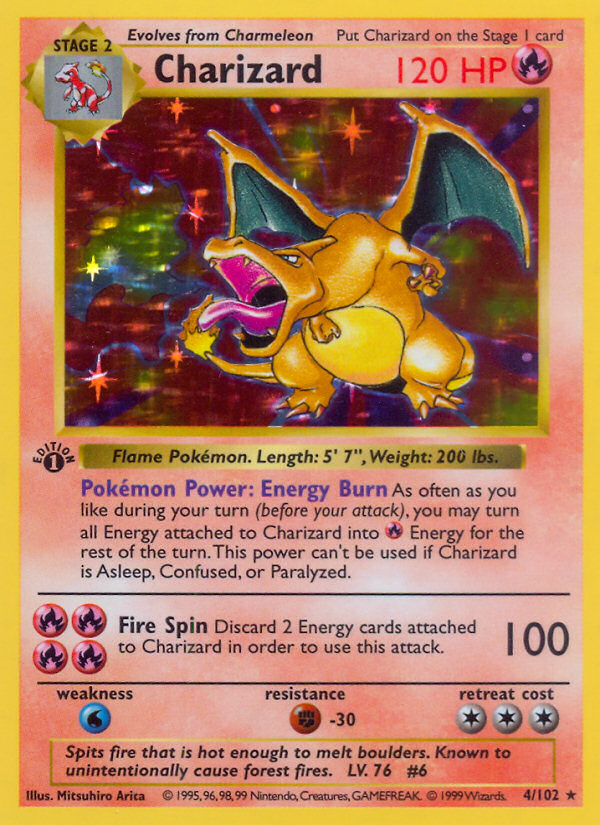
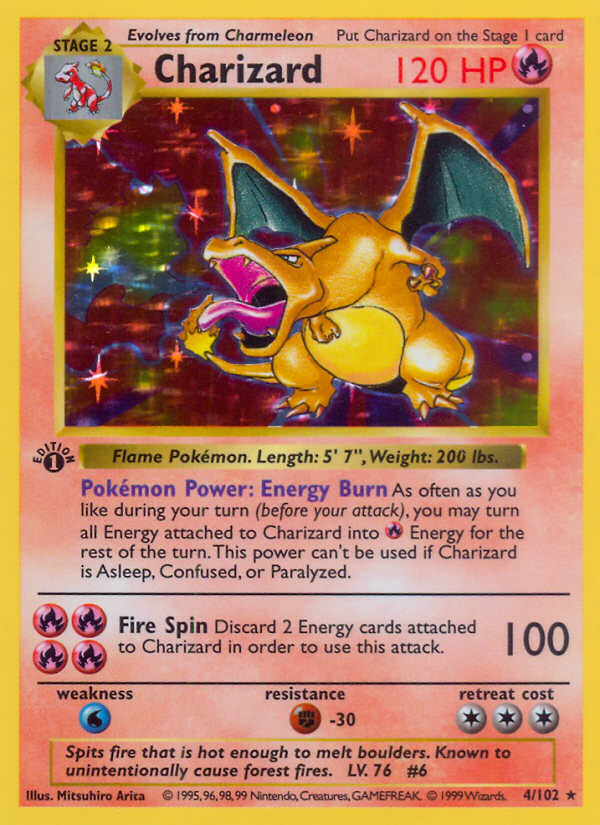
This is the granddaddy of Pokémon card myths, and it’s rooted in a real but misunderstood fact: in older sets, “Holo Rare” was the top print rarity, so people learned to associate the shiny foil pattern with “this is the good one.” That was never really true even in 1999 — Base Set alone had 16 different holo rares, and only a handful of them (Charizard, Blastoise, Venusaur, and to a lesser extent Mewtwo) consistently sell for real money. The other dozen — cards like Base Set Machamp, Ninetales, or Poliwrath — typically trade in the $5–$15 range raw, not because they’re not holo, but because nobody’s chasing them specifically.
It gets more pronounced in modern Pokémon TCG. Standard holo rares from most 2020s sets — the ones you pull in nearly every pack — routinely sell for $1–$5 on TCGplayer. Holographic foil is a print rarity tier, not a value guarantee; it just means the printer used a foil stamp on that slot in the set, which happens dozens of times per set. What actually drives a specific card’s value is character popularity (Charizard, Pikachu, Umbreon, Eevee all carry a premium simply for who they are), how limited the print run was, and whether the card is currently in competitive play.
The catch: even genuinely popular Pokémon aren’t immune — a holo of a beloved character from an overprinted set (say, a Scarlet & Violet-era set with a huge box print run) can still be a $2 card two years later once the initial hype fades.
Myth 2: Errors and Misprints Are Always Worth More
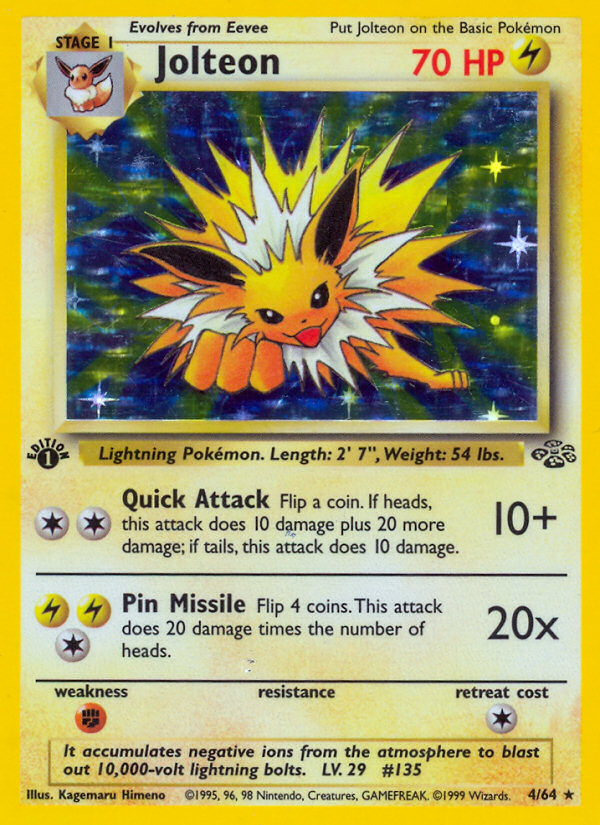
Error cards have a mystique that makes them sound automatically valuable — “it’s a mistake, so it must be rare.” Sometimes that’s true. The most famous example is the Jungle Jolteon “No Symbol” error (1999), where a batch of Unlimited-print Jolteon holos were missing the small edition/set symbol that should’ve appeared on the card. It’s a real, well-documented printing error and it does carry a premium over a completely random common — but the premium is more modest than most people expect. Recent sales put standard Unlimited Jungle Jolteon holos (#4/64) around $50 in played condition, while the No Symbol error version has sold in a similar $30–$65 band depending on grade and listing. That’s a real but modest bump, not the 10x markup collectors often assume “error = jackpot” implies.
Other well-known Pokémon errors — like Dark Persian’s missing HP or “wrong back” cards where a card was printed with mismatched front/back stock — can command real multiples of the base card’s value, but almost always only when third-party graded and authenticated. A self-reported, ungraded “error” you spot in your own binder is worth investigating, but treat it skeptically: many “errors” are actually normal print variations (ink saturation, centering) that don’t move the needle at all, and uncorrected errors that ran for an entire print cycle (rather than a short misprint batch) are common enough that they don’t carry a premium either.
The catch: getting an error authenticated costs real grading fees (PSA’s standard tier alone runs $25–$75+ per card depending on turnaround as of 2026), so unless the card is already worth a meaningful amount, chasing an error premium can cost more than it returns.
Myth 3: Old Automatically Means Valuable
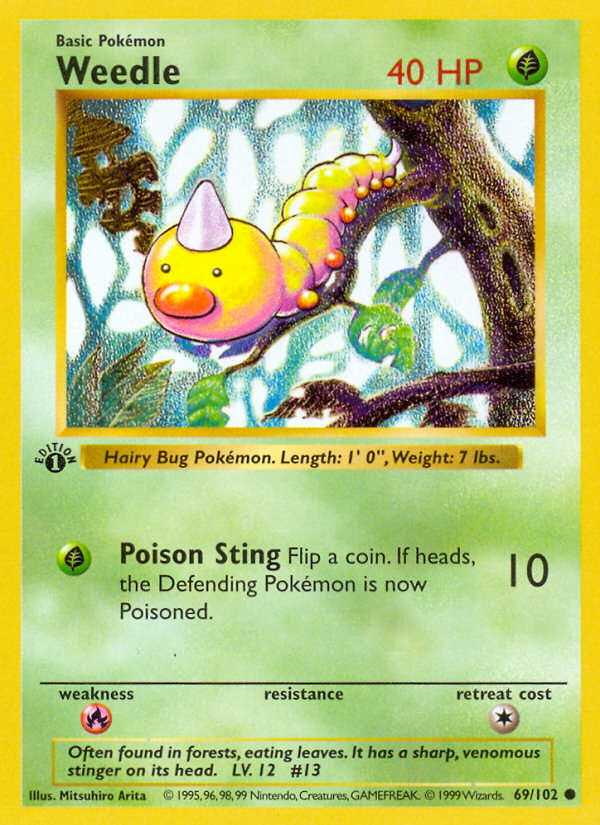
“It’s from 1999, it has to be worth something” is one of the most common things people say when they find an old binder. It’s understandable — but it’s wrong more often than it’s right. Take Weedle from Base Set (#69/102, Common). It’s from the exact same 1999 print run as the Base Set Charizard, printed on the same presses, distributed in the same packs. A raw Unlimited copy in played condition sells for roughly $1–$2 today — barely more than the paper it’s printed on. Even a pristine 1st Edition PSA 10 Weedle — genuinely hard to find in that grade — tops out around $275, a fraction of what a common’s rarity symbol might suggest it “should” be worth if age were the deciding factor.
The reason is straightforward: Wizards of the Coast printed tens of millions of Base Set commons to keep up with 1999’s Pokémon mania, and most of them survived in decent shape because kids didn’t play the crappier cards as hard. Supply massively outstrips demand for a card nobody’s trying to complete a specific playset of. Compare that to Base Set Charizard, which had exactly the same print run scale but sits at the top of nearly every collector’s want list — the card, not the era, is what creates scarcity-meets-demand.
The catch: this cuts both ways — a genuinely scarce modern card (a low-print-run promo, a tournament-only prize card) can be worth more than most vintage cards despite being only a few years old.
Myth 4: 1st Edition Always Crushes Unlimited
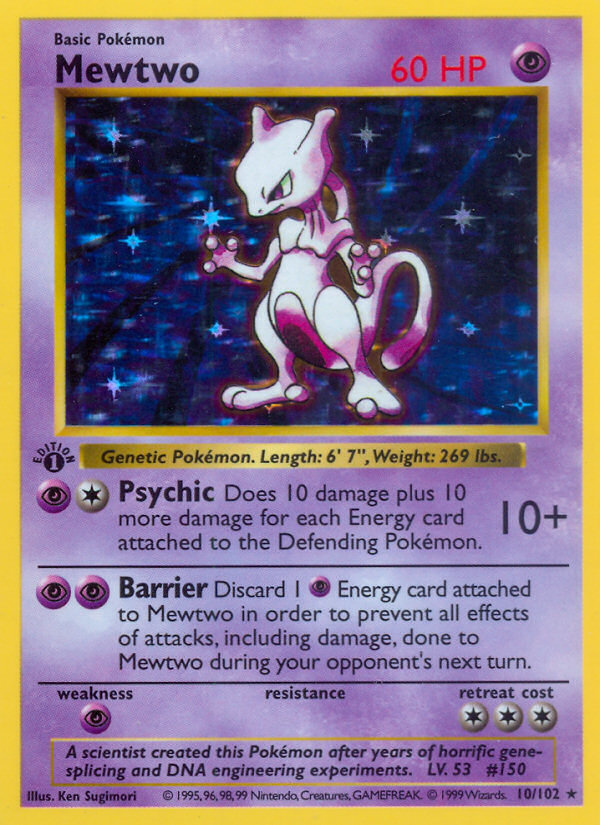
This one is true directionally but wildly overstated in scale. WOTC-era Pokémon cards were printed in three waves — 1st Edition (smallest run, has the “Edition 1” stamp), Shadowless (an early Unlimited print before a drop-shadow was added to the artwork box), and standard Unlimited (the mass-market run). For chase cards, the gap between waves is genuinely dramatic: a Base Set Charizard runs roughly $300–$500 raw in Unlimited, but a 1st Edition raw copy sells in the $3,000–$6,000 range, and a Shadowless PSA 10 sits around $15,000–$25,000. On a Base Set Mewtwo, the standard Unlimited version runs around $50, while a Shadowless copy pushes closer to $900–$1,000 — nearly a 20x gap on the exact same artwork and card text.
But apply that same logic to a common like Weedle, and the “1st Edition always wins” rule mostly evaporates: a 1st Edition Weedle in played condition might fetch a few dollars more than an Unlimited copy, not thousands. The premium scales with how much collector demand already exists for that specific character — 1st Edition status amplifies existing demand, it doesn’t create demand out of nothing.
There’s also a widespread mix-up worth flagging directly: Shadowless is not the same as 1st Edition. Shadowless cards lack the drop-shadow graphic in the artwork frame (added starting partway through the Unlimited run) but do not have the “Edition 1” stamp — some sellers list Shadowless cards as “1st Edition (no stamp)” which isn’t accurate and can lead buyers to overpay.
The catch: 1st Edition premiums are highly card-specific and set-specific (they matter far less outside the 1999–2000 WOTC era), so don’t assume the rule applies to a random modern “1st Edition stamped” reprint promo.
Myth 5: A PSA 10 Is Always Worth Dramatically More Than a PSA 9 (or Raw)
Grading absolutely matters, but the size of the PSA 10 premium varies enormously by era, and modern collectors often assume vintage-level gaps apply everywhere. They don’t. On vintage cards, the gap can be huge because Gem Mint survivors are genuinely scarce after 25+ years of handling — a Shadowless Base Set Charizard runs about $4,000–$7,000 as a PSA 9 but $15,000–$25,000 as a PSA 10, roughly a 3–5x jump for one grade point. On modern cards, the story is usually different: PSA 10 premiums on 2020s-era chase cards typically run 30%–80% over a PSA 9 of the same card, not multiples, because modern print quality and centering are far more consistent, so a much higher share of submitted copies come back Gem Mint.
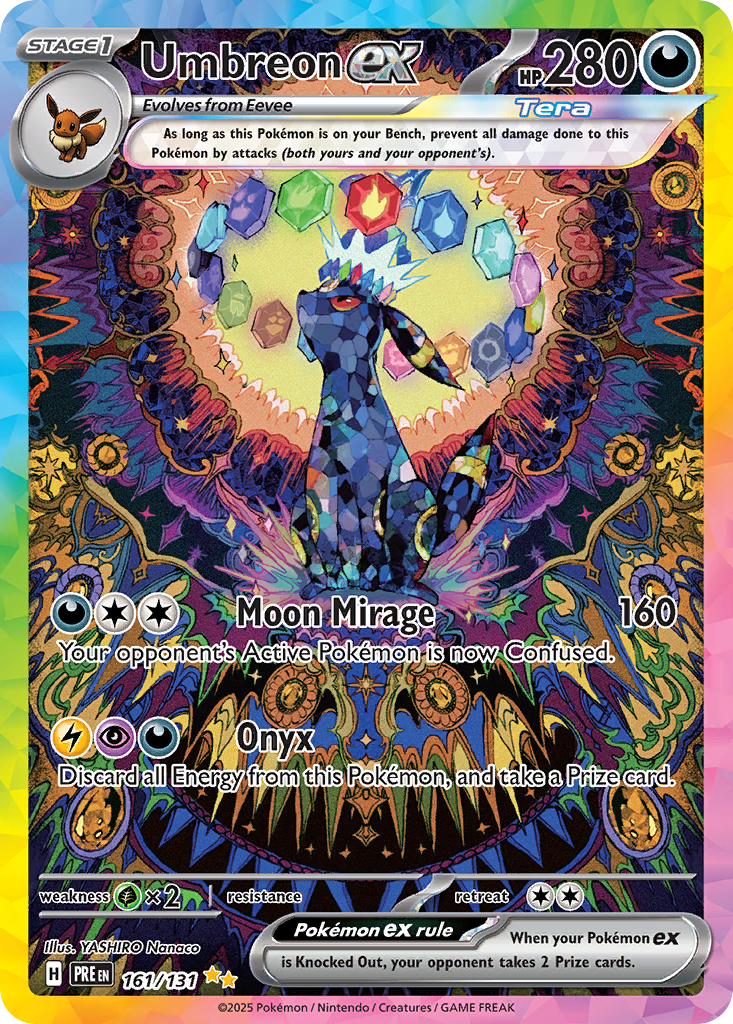
Take Umbreon ex (Special Illustration Rare, Prismatic Evolutions #161/131, released January 2025) — one of the most in-demand modern chase cards of the past two years. Raw copies have traded anywhere from roughly $1,300 to nearly $1,900 depending on the week you check, which itself is a good reminder that “market price” on a hot modern card is a moving target, not a fixed number. The point isn’t the exact figure — it’s that on a card like this, the grading premium is proportionally much smaller than what vintage collectors are used to, and grading fees plus turnaround time (weeks to months, depending on PSA’s service tier) can eat into the upside if the raw card is already worth a lot.
The catch: for lower-value modern cards (anything under roughly $20–$30 raw), grading fees alone often exceed any value the slab adds — it only makes financial sense on cards where the raw price already justifies the submission cost.
Myth 6: Gold or Rainbow “Secret Rares” Are Guaranteed Good Investments
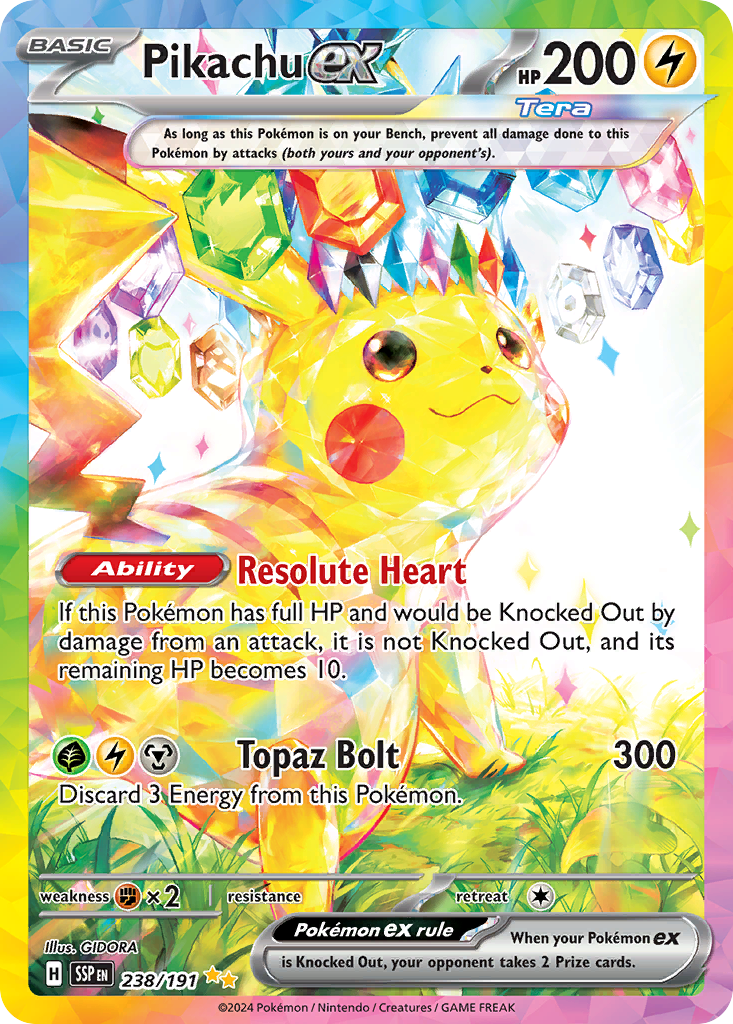
Gold cards, Rainbow Rares, and modern “Hyper Rare” full-arts look expensive and feel like a jackpot pull, which leads a lot of newer collectors to assume they’re a safe store of value. Reprint risk says otherwise. Pikachu ex (Special Illustration Rare, Surging Sparks #238/191, released November 2024) is a good recent example: when The Pokémon Company announced reprints tied to the Mega Evolution: Ascended Heroes release in early 2026, the raw market price on this card dropped from roughly $320 to about $254 — a 21% correction in a short window, purely from a reprint announcement changing supply expectations, not because the card itself got worse or less popular. Sword & Shield-era Rainbow Rares (2020–2021) show a similar longer-term pattern: several were given extended print runs across multiple products, and PSA population counts on them have climbed high enough that prices have trended down steadily since 2022 rather than appreciating like their vintage counterparts.
None of this means hyper rares are bad pulls — they’re genuinely the most exciting cards to open, and a strong one from a hyped set can hold value well, especially if the character is popular (Charizard, Pikachu, Umbreon, Eevee-line cards tend to be the most resilient). But “shiny and expensive right now” is not the same as “scarce long-term.” The cards that hold value best over years are usually ones with a genuinely small, one-time print run and lasting character demand — not simply the most visually flashy rarity tier in a given set.
The catch: you generally can’t know at pull time whether a card will get reprinted two years later — it’s an inherent risk of buying (or holding) modern chase cards, not something you can fully diligence away.
Price snapshot: myth cards compared (as of August 2026)
| Card | Edition / Grade | Approx. price | What’s actually driving it |
|---|---|---|---|
| Charizard, Base Set #4/102 | Unlimited, raw NM | $300–$500 | Character demand, not just holo status |
| Charizard, Base Set #4/102 | Shadowless, PSA 10 | $15,000–$25,000 | Extreme scarcity of Gem Mint survivors |
| Charizard, Base Set #4/102 | 1st Edition, PSA 10 | $200,000+ | Print-run scarcity + grade + edition stacked together |
| Weedle, Base Set #69/102 | Unlimited, raw played | ~$1–$2 | Common with a massive print run |
| Weedle, Base Set #69/102 | 1st Edition, PSA 10 | ~$275 | Low PSA 10 population, but still no character demand |
| Jolteon, Jungle #4/64 (standard) | Unlimited, raw | ~$50 | Normal vintage holo demand |
| Jolteon, Jungle #4/64 (No Symbol error) | Unlimited, raw | ~$30–$65 | Modest, real error premium — not a jackpot |
| Umbreon ex, Prismatic Evolutions SIR | Raw, NM | ~$1,300–$1,900 | Modern chase demand, still volatile |
| Pikachu ex, Surging Sparks SIR | Raw, post-reprint news (2026) | ~$254 (down from ~$320) | Reprint risk cooling demand |
Prices sourced from recent TCGplayer/PSA-linked market trackers and eBay completed sales as of late July–early August 2026; expect real listings to vary by condition, seller, and week. Again — not financial advice, just a snapshot.
Q&A: Common Reader Questions
Does a card need to be holo to be worth money?
No. Plenty of non-holo cards — first-run promos, certain non-holo rares from small print runs, or cards tied to tournament prizes — outsell common holos by a wide margin. Holo foil is a print rarity tier from decades ago that stuck in collectors’ minds, not a modern value signal.
How can I tell if a card is a real error or just a normal print variation?
Compare it against multiple verified images of the same card (the Pokémon TCG API and PSA’s CardFacts database are both good free references) and check whether the anomaly is documented as a known error for that print run. If it’s not a widely recognized error, it’s more likely a minor print variation that won’t add value. When in doubt on anything that might be worth grading, get a second opinion before paying submission fees.
Is it worth getting a bulk common graded just because it’s old?
Almost never. Grading fees (roughly $25–$75+ per card at standard PSA turnaround tiers as of 2026, more for expedited service) usually exceed what a graded common will sell for, even in a high grade. Grading only tends to pay off on cards where the raw value already clears roughly 2x the grading cost.
Why did my “valuable” card drop in price after a new set came out?
Most likely a reprint. The Pokémon Company periodically reprints popular cards’ artwork or stats in new sets or special collections, which increases total supply and typically pulls the price of the original down — the Pikachu ex example above shows this happening in a matter of weeks, not years.
What’s the safest way to confirm a card’s real market value before buying or selling?
Cross-check multiple sources — TCGplayer’s market price, recent eBay sold listings (not asking prices), and a PSA/CGC population report if the card is graded — rather than relying on a single listing or seller’s asking price. Prices for hot modern chase cards especially can swing week to week.
Takeaway
There’s no single rule — not “it’s holo,” not “it’s old,” not “it’s an error,” not “it’s 1st Edition,” not “it’s a PSA 10,” not “it’s a gold rare” — that reliably predicts a Pokémon card’s value on its own. Real value comes from the intersection of genuine scarcity (small, one-time print runs), sustained character demand, and condition, and each of those factors can be checked against real sold-listing data rather than assumed. If you’re building a collection with future value in mind, the boring-but-correct approach is to research the specific card, not the category it falls into — and to hold onto raw copies in Ultra Pro Toploaders while you figure out whether grading is even worth it. If you just want a piece of Pokémon history to display without spending vintage-chase-card money, an Pokémon Base Set Charizard (Unlimited) scratches that itch for a fraction of the Shadowless or 1st Edition price — and if you’re chasing the modern side of the hobby, an Umbreon ex (Prismatic Evolutions, Special Illustration Rare) is currently one of the more resilient hyper rares out there, reprint risk notwithstanding.
For more on how grading specifically affects price, see our PSA vs. CGC vs. BGS Pokémon card grading guide, and if you’re shopping for any of the cards mentioned above, check our guide on how to buy Pokémon cards online safely to avoid counterfeits.
Related Articles
- Vintage WOTC Pokémon Cards: A Collector’s Guide (1999–2003)
- Japanese Pokémon Figures: A Collector’s Guide to Moncolle, Gashapon & ARTFX
More Trading Card Game Guides
- One Piece Card Game Value Myths, Debunked (2026) (One Piece Card Game)
- Dragon Ball Fusion World Card Value Myths, Debunked (Dragon Ball Super Card Game)
Comments